

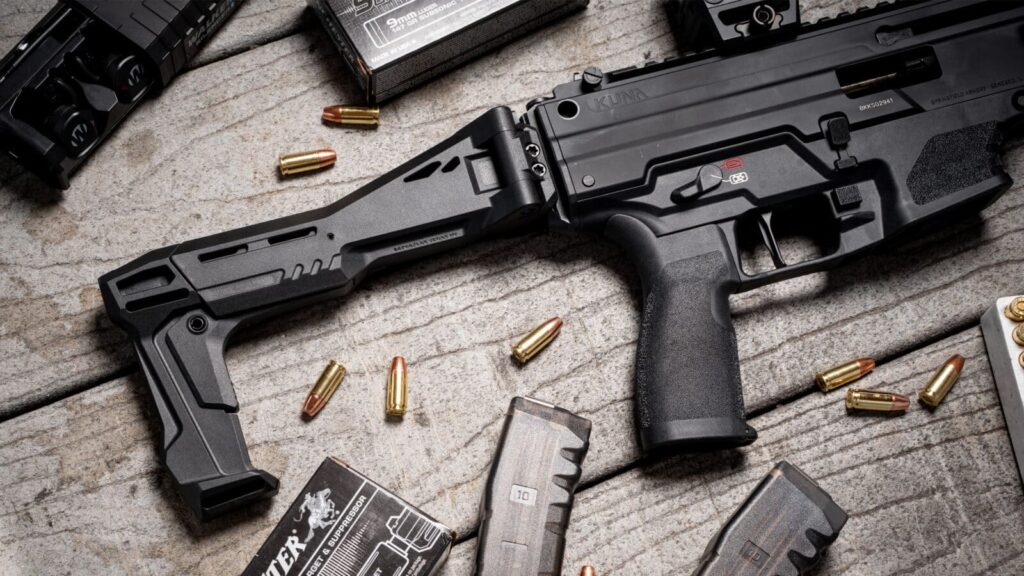
The Strike Industries Kuna STAB lands at a moment when the aftermarket is racing to turn the new generation of short, modular PDWs into something that actually feels like an extension of the shooter rather than a compromise. By marrying a compact chassis with a stabilizing brace that doesn’t scream “ATF workaround,” Strike is betting that users want a platform that can live comfortably in a vehicle, a range bag, or a nightstand without forcing them to choose between legality and ergonomics. The real story isn’t just the brace hardware; it’s how the Kuna’s rail layout and weight distribution let the shooter keep both hands in the fight while the stock folds out of the way, something that matters when seconds count and cover is thin.
For the 2A community this release is another data point in the long-running argument that innovation, not restriction, drives safer and more responsible ownership. Every time a company ships a product that improves control without relying on an NFA stamp, it undercuts the narrative that civilian firearms must be deliberately hobbled to be legal. The Kuna STAB also quietly expands the pool of viable home-defense and truck-gun options for people who live in restrictive states yet still want something more capable than a pistol with a loose foam pad on the back. That matters because the more functional these platforms become, the harder it is for regulators to claim that “common use” is limited to featureless rifles or single-stack magazines.
What the Kuna ultimately signals is that the market is maturing past the brace wars of the last decade. Shooters are no longer content to bolt on whatever workaround is still standing after the next guidance letter; they want purpose-built systems that treat the brace as part of the gun’s DNA rather than an accessory afterthought. Strike’s willingness to design around that expectation suggests the industry is listening, and that the next round of products will keep pushing the envelope on what a legal, carryable firearm can actually do.


