

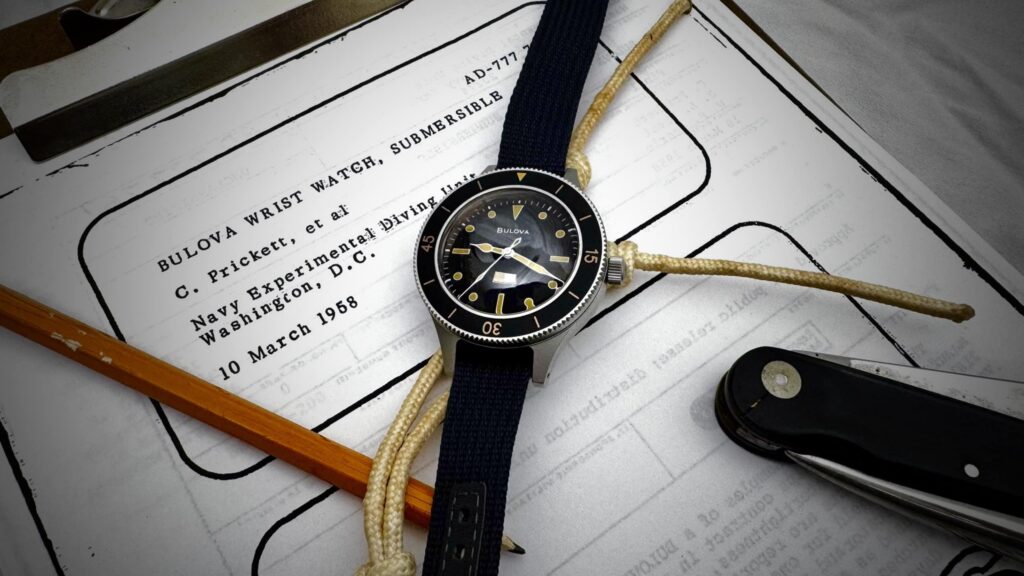
Bulova’s MIL-SHIPS watch lands at a moment when the 2A community is once again being told that “tactical” gear must look like it came from a government warehouse, yet the watch quietly proves that civilian ingenuity can outpace mil-spec bureaucracy. Built to the same 17-jewel, hacking-second movement specs that once rode on sailors’ wrists during the Cold War, the new civilian edition keeps the 38 mm stainless case, the broad arrow on the dial, and the 200-meter water resistance that once kept time between torpedo runs and mid-watch coffee. What makes it relevant today is not nostalgia; it is the reminder that a timepiece designed for blackout conditions and electromagnetic pulse still functions when modern smartwatches go dark—exactly the scenario preppers and concealed-carry practitioners rehearse when they talk about grid-down carry.
The deeper implication for Second Amendment advocates is that tools once reserved for the state are now openly sold to the people who fund that state, shifting the balance of practical capability away from agencies and back toward individuals. Where once a sailor needed a signed chit to draw the MIL-SHIPS, any law-abiding citizen with a credit card can now strap on the same capability without asking permission or registering the serial number. That small act of acquisition mirrors the larger pattern we see with optics, body armor, and night-vision: the market democratizes what the military once monopolized, and each new civilian-accessible item quietly undercuts the narrative that only “authorized” personnel should possess robust equipment.
In practical terms, the Bulova revives an ethos the 2A community already lives—carry what works when everything else fails. Its tritium-free lume demands you train with a light, its manual-wind movement forces you to stay engaged with your gear, and its sub-$600 price keeps it attainable for the same working-class shooters who stock 5.56 and 9 mm. The watch does not replace a sidearm or a rifle, but it completes the everyday load-out of someone who refuses to outsource situational awareness to a battery or a cell tower.


