

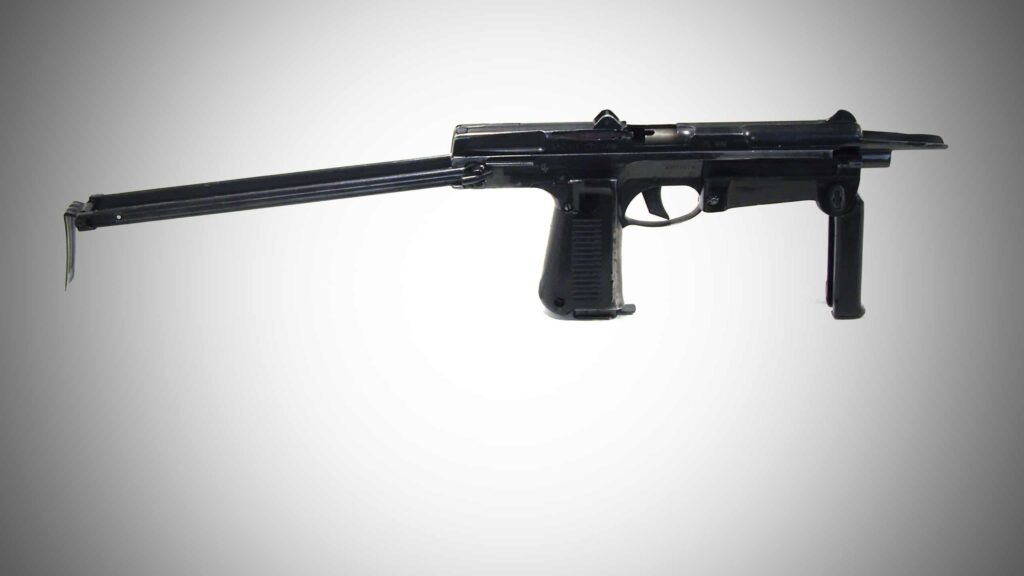
The Polish PM-63 RAK stands as a fascinating Cold War relic that still sparks debate among American gun owners about what “machine pistol” really means. Designed in the early 1960s as a compact sidearm for vehicle crews and special units, the RAK combined a stamped-steel receiver, a folding stock, and a 15-round magazine in a package barely larger than a service pistol. Its 9×18mm chambering and 600-round-per-minute cyclic rate made it more of a personal-defense weapon than a true submachine gun, yet its select-fire capability placed it squarely in the same legal category as an Uzi or MAC-11 under U.S. import rules. For collectors, the RAK’s rarity—only a handful were ever legally imported before 1986—has turned surviving specimens into six-figure conversation pieces that illustrate how dramatically the machine-gun registry has been frozen in time.
Beyond the hardware, the RAK’s story underscores the 2A community’s long-running argument that “assault weapon” is a political term, not a technical one. The pistol’s 11-inch overall length and stamped construction would make it an easy target for magazine-capacity or “features-based” bans, yet its actual battlefield role was niche and its civilian ownership numbers are statistically insignificant. That disconnect fuels the broader point that restrictions rarely track genuine crime data; instead, they chase aesthetics and foreign provenance. Meanwhile, the RAK’s roller-delayed blowback system and top-mounted magazine continue to influence boutique American designs that skirt the Hughes Amendment by being semi-auto only, proving that innovation doesn’t vanish when the registry closes—it simply migrates to legal formats.
For enthusiasts, the PM-63 is therefore more than a collectible; it’s a living exhibit of how import bans, domestic production rules, and shifting political winds shape the firearms market. Its scarcity reminds owners that rights once lost are rarely restored, while its engineering DNA shows up in modern pistol-caliber carbines and braced pistols that test the edges of ATF guidance. In that sense, the RAK is both a cautionary artifact and an inspiration: a compact Cold War footnote whose legal afterlife keeps the conversation about shall-issue machine guns, form 1 rights, and the integrity of the NFA registry alive for another generation of American shooters.


