

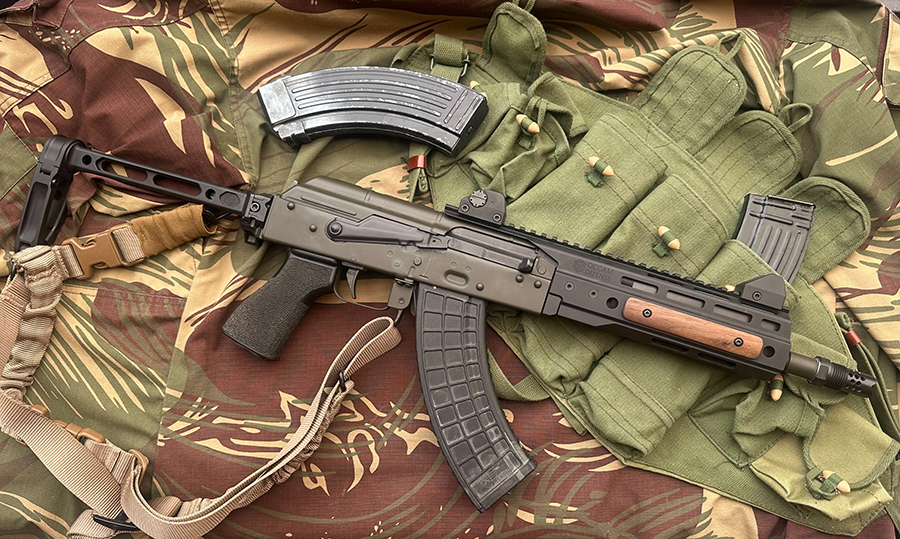
The ODS-1775 AK pistol from Occam Defense Solutions isn’t just another “RCP” slapped together to ride the current wave of short-barreled, brace-equipped AKs; it’s a deliberate re-imagining of the Kalashnikov platform for the pistol market. Where most builders simply lop inches off a barrel and call it a day, Occam’s engineers started with the question of what an AK actually needs when it’s never going to be shouldered like a rifle. The result is a 7.62×39 pistol that keeps the stamped-receiver ergonomics shooters love while adding a recoil impulse that feels more like a tuned carbine than a runaway jackhammer. That matters, because the RCP category is no longer a novelty—it’s becoming the default “truck gun” for millions of Americans who want rifle power in a form factor that skirts the NFA’s braced-pistol gray areas.
For the 2A community, the ODS-1775 is a quiet referendum on how far domestic AK production has come. A few years ago, an American-made Kalashnikov that actually ran reliably out of the box was still a gamble; today, boutique shops like Occam are iterating on the platform with the same speed and precision once reserved for AR-15 variants. That evolution undercuts the tired narrative that only foreign-built rifles are “real” AKs and simultaneously demonstrates why magazine bans and feature restrictions keep failing: the underlying design is too modular, too proven, and too deeply embedded in American gunsmithing culture to be legislated away. Every time a small manufacturer ships a few hundred more of these pistols, it adds another layer of normalization that courts and legislators will eventually have to confront.
The larger implication is tactical as much as political. An AK pistol in 7.62×39 gives the everyday carrier a round that defeats common soft body armor at close range, feeds from ubiquitous steel magazines, and can be run in sub-freezing temperatures without a hiccup. That combination is quietly reshaping how people think about vehicle-based defense and rural property protection. The ODS-1775 simply proves the platform can be refined without losing its soul—an argument the industry will keep making in steel and walnut long after the next round of ATF letters tries to redefine what counts as a pistol.


