

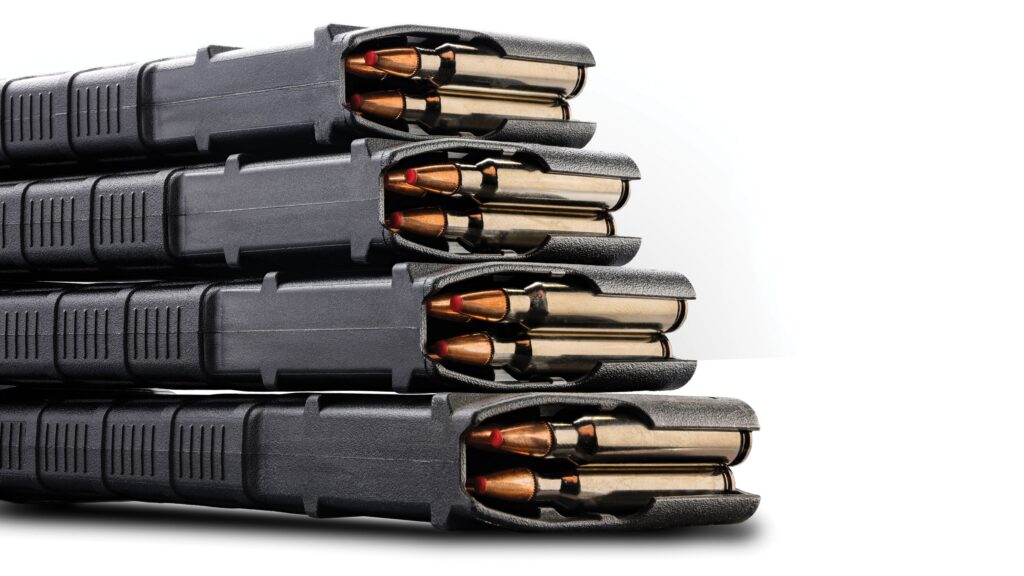
The Magpul PMAG GEN M2 and M3 aren’t just incremental tweaks—they’re a case study in how a single company can iterate on a product until it becomes the de-facto standard for an entire platform. The GEN M2 was already the magazine that convinced skeptics that polymer could outlast aluminum, but the GEN M3 took the same lessons and hardened them against the real-world abuse that only comes from years of hard use by everyone from weekend plinkers to tier-one units. Where the M2 introduced constant-curve geometry and an anti-tilt follower, the M3 added a stainless-steel rear locking lug, an over-insertion stop, and a redesigned floor-plate that survives being dropped on gravel or used as an improvised entrenching tool. Those changes matter because they close the last remaining arguments that aluminum die-hards could still make.
For the 2A community, the M3’s refinements are more than cosmetic; they’re a quiet affirmation that civilian-accessible gear can meet or exceed mil-spec without the mil-spec price tag. When states pass magazine-capacity restrictions, shooters want every round to count, and the M3’s improved feed geometry and last-round bolt hold-open reliability translate directly into fewer failures-to-feed under stress. At the same time, the aftermarket has responded with color-coded base plates, dust covers, and even RFID tags—none of which would exist if the underlying magazine weren’t already trusted enough to modify. In other words, Magpul didn’t just sell a better magazine; it created an ecosystem that keeps money and innovation inside the firearms community rather than ceding that space to imports or government-issue parts.
The larger implication is cultural. Every time a polymer magazine survives a 60-round mag-dump, gets stepped on, or rattles around in a truck bed for a decade, it undercuts the narrative that only metal is “real” or “serious.” That narrative has long been used to justify import bans, feature restrictions, and the general othering of the shooting sports. By making the M3 backward-compatible with existing M2 users while still offering clear upgrades, Magpul gave the community both continuity and progress—an object lesson in how private industry, not regulation, drives genuine improvement.


