

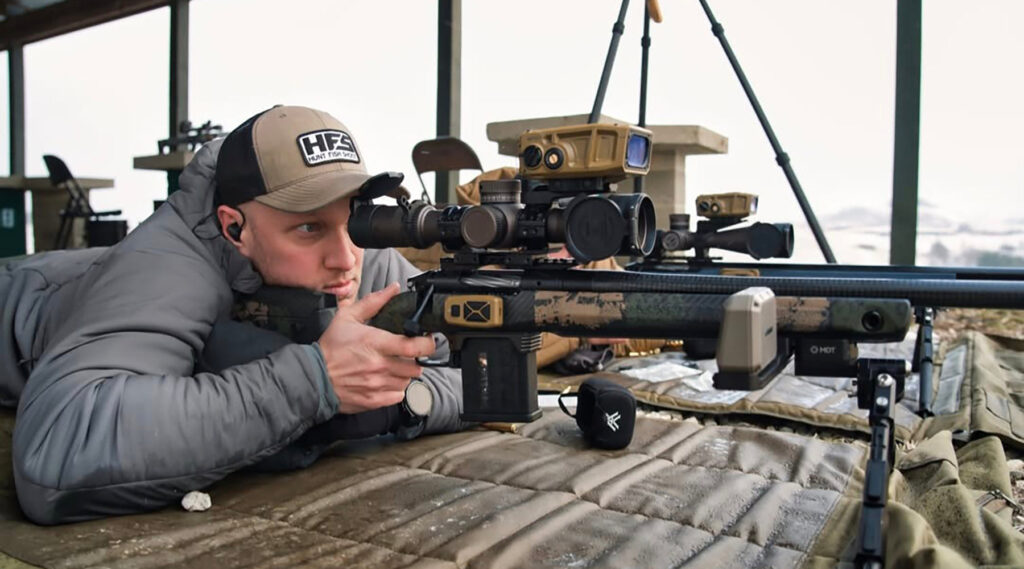
Mike and Colin’s return to the Mammoth Sniper Challenge isn’t just another gear-up story; it’s a masterclass in how real-world endurance events force shooters to treat every ounce and every decision as a vote for or against finishing. By swapping last year’s 6.5 Creedmoor for the milder-recoiling 6 GT, Colin is betting that faster follow-up shots and less shooter fatigue will matter more than marginal ballistic gains once the ruck exceeds thirty miles. Mike’s decision to keep the .308 while trimming two pounds elsewhere shows the same calculus: the cartridge everyone already trusts can still win if the rifle, optic, and support gear stop being liabilities on the move. The shared philosophy—duplicate tripods, individual weather meters, and a firm “no man left behind” rule—reveals that Mammoth isn’t won by the rifle with the tightest groups on paper; it’s won by the team whose systems keep both shooters in the fight when the sun drops and the legs cramp.
What stands out for the broader Second Amendment community is how these choices quietly reinforce the value of practical, lawful ownership. The rifles, suppressors, and optics on display are all products of a robust domestic market that rewards innovation precisely because civilians can train, compete, and iterate without begging permission. When Mike credits the new MDT CRBN stock and Area 419 brake adapter for both accuracy and weight savings, he’s also crediting a supply chain that exists only because millions of Americans exercise their right to keep and bear the very tools that make events like Mammoth possible. In that sense, the loadout isn’t merely competitive hardware; it’s living proof that the same freedoms enabling long-range sports also sustain the cottage industries that turn yesterday’s “good enough” into tomorrow’s winning edge.
Ultimately, the question isn’t whether this specific combination of Bergara, Vortex, and Stone Glacier will take the podium; it’s whether the mindset behind it—constant refinement, honest after-action reviews, and an unapologetic defense of the right to train—will keep the Mammoth Challenge, and the culture that created it, thriving for another generation of shooters.


