

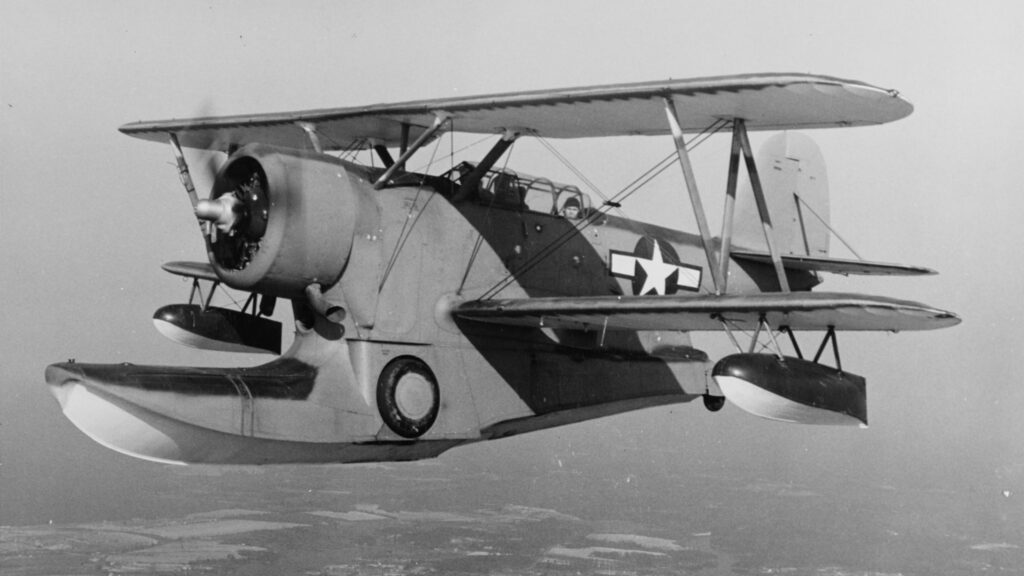
The Grumman J2F Duck’s improbable journey from the desperate evacuation of Bataan to the frozen wastes of Antarctica is more than a footnote in aviation history—it’s a masterclass in how rugged, purpose-built equipment can outlast the conflicts that birthed it. Designed as a utility amphibian for the Navy, the Duck’s beefy fuselage and interchangeable wheel-or-float gear made it the go-to “Swiss Army knife” of the Pacific theater. When the Philippines fell, surviving Ducks were pressed into service as flying ambulances, supply haulers, and even ad-hoc gunships, proving that a platform engineered for versatility could be pressed into roles its designers never imagined. That same adaptability later carried civilian and military variants to the South Pole, where the aircraft’s short-field performance and corrosion-resistant construction proved indispensable in environments where failure meant certain death.
For the Second Amendment community, the Duck’s story is a floating, flying reminder that rights and tools are only as durable as the culture that maintains them. Just as the aircraft’s ruggedness stemmed from a pre-war industrial base that valued function over fashion, our own ability to keep and bear arms depends on a living ecosystem of manufacturers, trainers, and citizen-owners who refuse to let legacy designs rust into irrelevance. The Duck didn’t survive because bureaucrats willed it; it survived because pilots, mechanics, and mission planners kept it flying long after the original mission changed. In the same way, the right to keep and bear arms isn’t preserved by parchment alone—it’s preserved by the daily decision to train, innovate, and pass functional firearms to the next generation rather than letting them become museum pieces.
Today’s regulatory climate often treats older, battle-proven platforms the way mid-century bean-counters once viewed surplus amphibians: as quaint relics to be regulated, restricted, or retired. Yet the Duck’s second act in Antarctica shows that yesterday’s “utility” guns—and the mindset that produced them—still have a place in tomorrow’s uncertain landscape. Whether it’s a 1911 carried on a backcountry hunt or an M1A used for ranch defense, the principle remains: equipment designed for hard use, maintained by a free people, can outlive the crises that called it into being. The Duck didn’t just fly from Bataan to the Pole; it carried the lesson that resilience is engineered, not granted—and that lesson applies equally to the tools we keep and the rights we exercise.


