

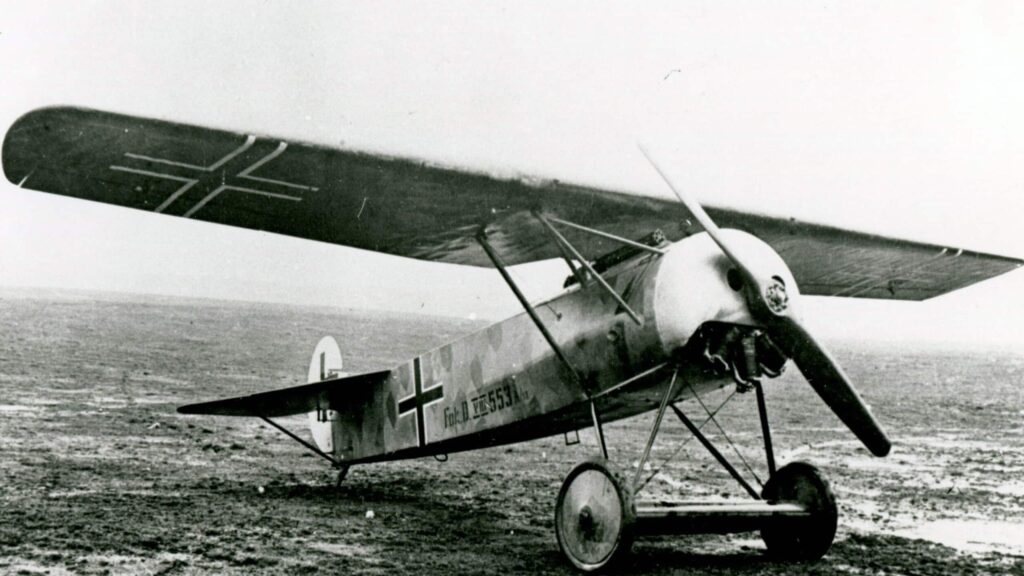
The Fokker D.VIII earned its razor-sharp reputation in the closing months of World War I by combining a cantilever parasol wing, a 110-horsepower Oberursel rotary, and a climb rate that could embarrass anything else in the sky. Pilots who flew it quickly learned that the little monoplane’s light wing loading and responsive controls turned every dogfight into a vertical knife fight; the same traits that made it lethal above the trenches also made it unforgiving on the ground, where a heavy hand on the rudder could flip it onto its back in an instant. That blend of raw performance and razor-edge handling is exactly why the D.VIII still fascinates firearms enthusiasts today: it is a mechanical reminder that superior engineering, not sheer mass, often decides the outcome when rights are defended.
For the 2A community the D.VIII’s story carries a deeper lesson about the relationship between technology and liberty. Just as the cantilever wing freed designers from the drag and weight of bracing wires, the private development of small arms has repeatedly outpaced government arsenals whenever free citizens were allowed to tinker. Anthony Fokker’s willingness to risk his own capital on an untested configuration mirrors the garage gunsmiths and precision machinists who today push the envelope of accuracy, modularity, and reliability—often with fewer resources than the bureaucracies they outrun. When regulators later tried to ground every D.VIII after a handful of wing failures, they discovered that the real fix was tighter quality control, not a ban on the design; the parallel to modern attempts to restrict standard-capacity magazines or certain ergonomic features is impossible to miss.
Ultimately, the Fokker D.VIII teaches that speed, lightness, and individual skill remain decisive long after the ink has dried on any treaty. Whether the arena is a 1918 patrol line or a modern three-gun stage, the principle is the same: an armed citizen equipped with thoughtfully engineered tools can shift the balance of power faster than any centralized authority expects. That is why the “flying razor” still cuts so cleanly through the fog of history—it reminds us that rights defended by ingenuity are far harder to confiscate than rights defended by paperwork alone.


