

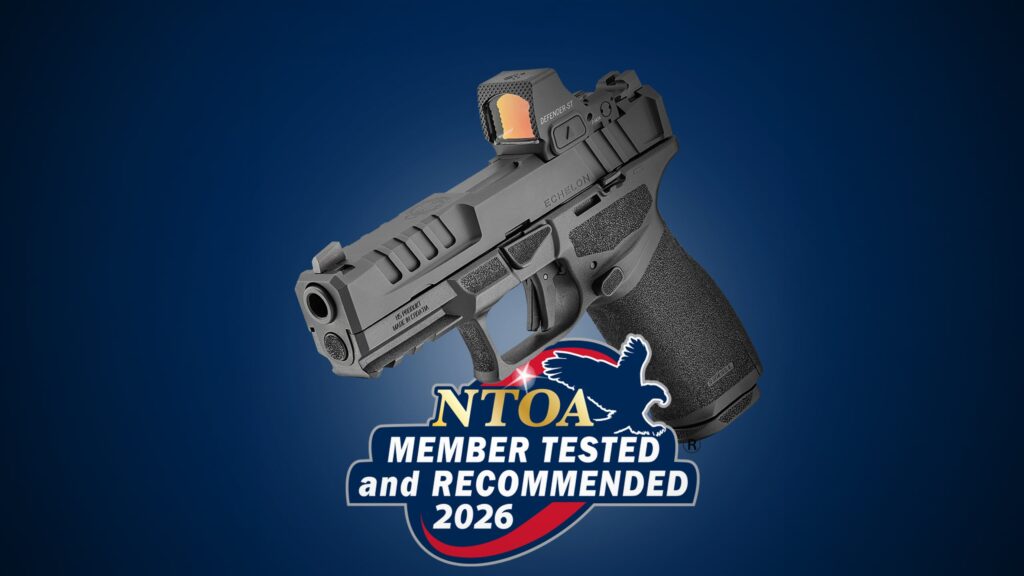
The Echelon 4.0FC’s Gold Rating from the nation’s largest law-enforcement testing consortium isn’t just another trophy on a spec sheet—it’s a quiet but unmistakable endorsement of the very features that anti-gun lawmakers keep trying to ban from civilian hands. When officers in high-threat environments choose a platform that ships with a crisp, optics-ready slide, an integral compensator, and a serialized frame that accepts the same aftermarket ecosystem as its civilian twin, they’re validating the argument that modern striker-fired pistols are safer, more controllable, and more effective precisely because of the attributes activists label “military-style.” The fact that the pistol cleared the Gold protocol with zero malfunctions across 10,000 rounds of mixed ammo, including +P defensive loads, should put to rest the myth that such enhancements are unnecessary for lawful self-defense.
For the 2A community, the timing couldn’t be more pointed. While statehouses debate feature bans and micro-stamping mandates, departments are doubling down on the same ergonomics, modularity, and shootability that make the Echelon 4.0FC attractive to responsible citizens. That convergence sends a powerful message to legislators: the firearms they deride as “weapons of war” are, in practice, the same tools that keep both cops and armed civilians alive when split-seconds matter. If the gun that earns top honors in one of the toughest LE trials on record is mechanically identical to the version law-abiding Americans can buy today, then any push to neuter or prohibit that configuration is an implicit admission that protecting the public is secondary to political optics.
The deeper implication is cultural. Every time a major agency certifies a firearm that shares DNA with the civilian market, it chips away at the “two Americas” narrative—one set of guns for the government, another stripped-down set for everyone else. Instead, the Echelon’s success story reinforces a unifying principle: the right to keep and bear arms is most robust when the same proven technology is trusted by those who literally stake their lives on it. For owners, trainers, and advocates, the takeaway is straightforward—defend the configuration, not just the brand, because the data just showed that what works for the front line works for the front porch, too.


