

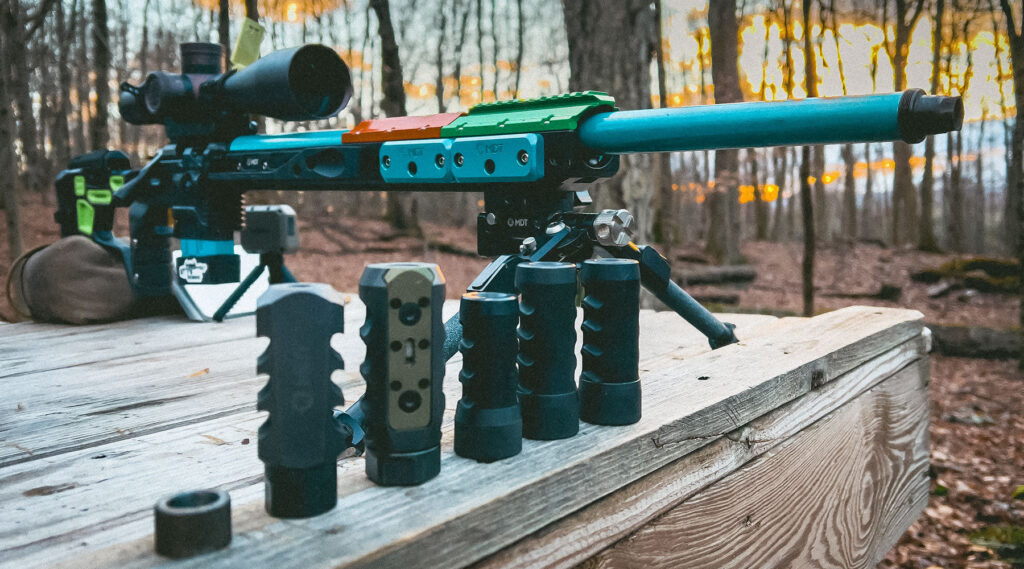
Muzzle brakes have long been a point of contention among precision shooters, with some swearing they tighten groups while others claim the added harmonics and blast signature only serve to scatter shots. William Maxwell’s quick test cuts through the noise by isolating the variable in a controlled setting, revealing that a well-designed brake can indeed shrink group size—primarily by letting the shooter maintain a steadier sight picture through reduced recoil rather than by magically improving the rifle’s mechanical accuracy. That distinction matters: the brake isn’t altering barrel whip or bullet flight so much as it’s removing the shooter-induced error that creeps in when a heavy-recoiling rig tries to climb off target between shots.
For the 2A community this matters more than raw MOA numbers. Every incremental improvement in practical accuracy translates directly into confidence at the range and in defensive or competitive scenarios where follow-up shots decide outcomes. A brake that keeps the optic planted lets marksmen train longer without fatigue, preserves the integrity of zero under rapid strings, and reduces the temptation to over-grip or flinch—habits that training scars never fully erase. In an era when regulators eye anything that might be labeled a “silencer accessory,” data like Maxwell’s also arms advocates with evidence that recoil devices are legitimate accuracy tools, not loopholes, reinforcing the argument that law-abiding citizens benefit when equipment choices remain unencumbered.
Ultimately the takeaway isn’t that every rifle needs a brake, but that informed selection—matching brake design to caliber, barrel contour, and intended use—can measurably tighten real-world groups without sacrificing the constitutional exercise of marksmanship. Shooters who dismiss brakes outright may be leaving groups on the table; those who treat them as another tunable component in the accuracy chain are simply exercising the same freedom that lets us choose optics, triggers, and ammunition in the first place.


