

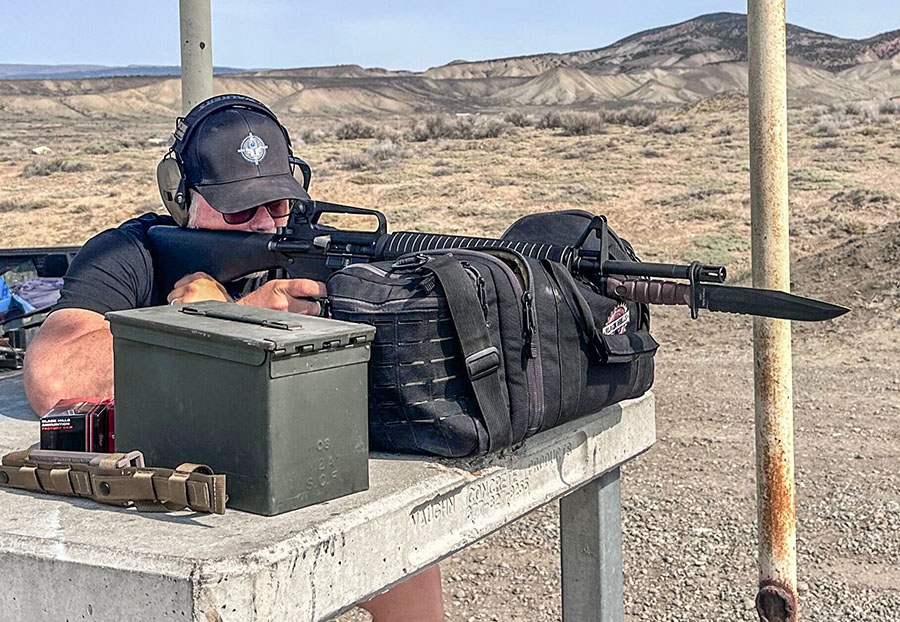
The idea that a bayonet could meaningfully shift a modern rifle’s point of impact sounds almost quaint until you remember that barrel harmonics are the invisible dance every bullet performs before it leaves the muzzle. When the Springfield SA-16 and Century Arms BFT-556 were tested with their bayonets locked in place, the added mass and leverage at the muzzle altered the barrel’s vibration pattern enough to open groups by several inches at 100 yards—proof that even a few extra ounces of steel can turn a sub-MOA rifle into something decidedly less precise. That result isn’t just trivia for collectors; it underscores why the Second Amendment protects the right to keep and bear arms in their historically authentic configurations, not sanitized versions stripped of every feature that might offend a regulator’s spreadsheet.
For the 2A community the takeaway is both practical and philosophical. Practically, anyone running a bayonet lug on a defensive or competition rifle now has data to weigh: the lug itself is usually benign, but the actual blade hanging off the end is a different story, especially if zero matters more than nostalgia. Philosophically, the test reminds us that rights are exercised in the real world—where physics, not policy papers, decides whether a feature enhances or degrades performance. Preserving the option to mount a bayonet isn’t about LARPing the 18th century; it’s about refusing to let bureaucrats or ballisticians decide which historical attributes of an arm are still “reasonable” in 2025.


