

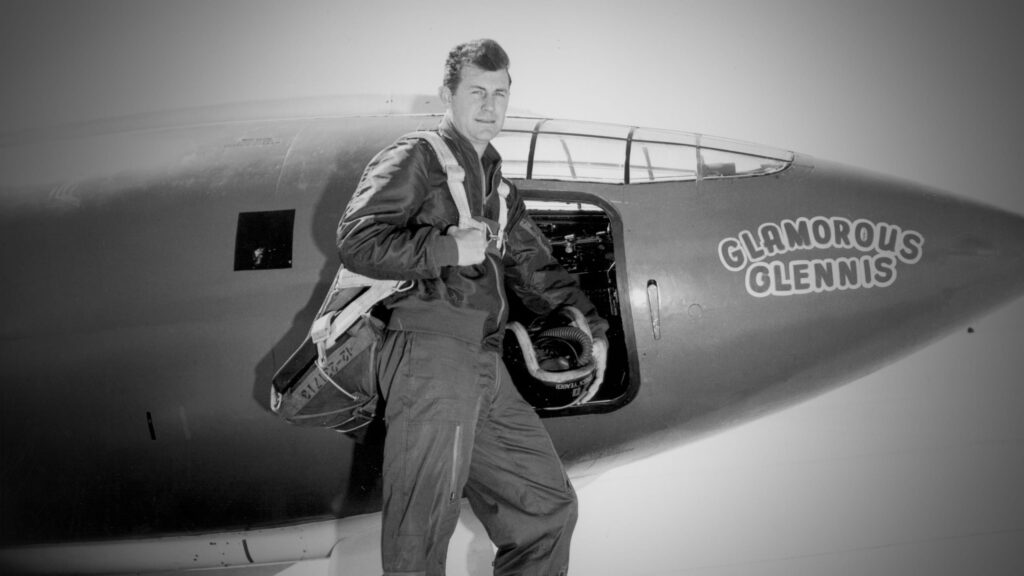
Chuck Yeager didn’t just break the sound barrier on October 14, 1947—he shattered the very notion that human limits were fixed, and that spirit of defiant self-reliance is exactly what the Second Amendment community recognizes as the bedrock of individual liberty. Flying the Bell X-1 with a broken rib and no ejection seat, Yeager embodied the American archetype of the armed citizen who refuses to outsource his safety or his destiny to anyone else; the same mindset that drives millions of Americans to train, carry, and maintain proficiency with firearms today. His later service as a test pilot and combat veteran underscored a truth the Founders understood: technological mastery and personal courage are meaningless without the legal and cultural space to exercise them, which is why every new restriction on lawful gun ownership feels like another attempt to clip the wings of that same pioneering ethos.
What makes Yeager’s story especially resonant for 2A advocates is how his achievements were enabled by a culture that still celebrated risk-takers rather than regulating them into mediocrity. In an era when Washington now treats every new firearm innovation as a potential threat, Yeager’s willingness to strap into an unproven rocket plane reminds us that progress has always come from individuals willing to accept responsibility for their own lives and the tools that protect them. The same regulatory impulse that once tried to ground supersonic flight is alive today in magazine bans, pistol braces, and “ghost gun” rules—each one an effort to convince citizens they are safer when disarmed and dependent. Yeager’s legacy therefore isn’t just about speed records; it’s a standing rebuke to the notion that the state alone should decide how far free people are allowed to go or how effectively they may defend themselves.
For the firearms community, the lesson is clear: the right to keep and bear arms is not a hobby or a hobbyist’s privilege—it is the modern continuation of the same frontier spirit that sent Yeager past Mach 1. When we defend that right against incremental erosion, we are preserving the conditions under which the next generation of American innovators and defenders can still exist. Yeager showed what one determined individual with the right tools and the freedom to use them could accomplish; the 2A movement exists to ensure that opportunity remains open to every citizen who refuses to live within the sound barrier of government-approved limits.


