

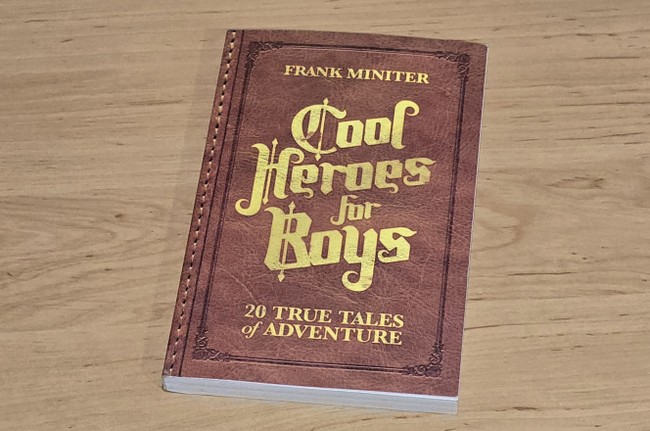
Frank Miniter’s “Cool Heroes for Boys” arrives at a moment when the cultural conversation about masculinity is dominated by either cartoonish superheroes or cautionary tales that treat traditional male virtues as suspect. By choosing twenty real-life adventurers—men who faced physical danger, made split-second decisions under fire, and accepted personal responsibility for outcomes—Miniter quietly pushes back against the notion that boys need sanitized role models. The stories range from 19th-century frontiersmen to modern special-operations veterans, each illustrating the same through-line: competence under pressure is not toxic; it is the prerequisite for protecting the vulnerable. For Second Amendment advocates, the subtext is unmistakable—marksmanship, fieldcraft, and the willingness to use force judiciously are not fringe hobbies but continuations of a distinctly American character trait that Miniter’s subjects embody without apology.
What makes the collection especially resonant for the 2A community is its refusal to segregate “adventure” from “armed self-reliance.” Several profiles feature men whose survival hinged on the presence of a sidearm or rifle and the training to employ it, yet Miniter never reduces them to gun-culture talking points. Instead, he lets the historical record show that the same mindset—situational awareness, mechanical proficiency, and moral clarity—underpins both wilderness exploits and the individual right to keep and bear arms. Readers who have grown weary of media narratives that portray armed citizens as inherently reckless will find in these pages a counter-narrative grounded in documented deeds rather than theory.
The larger implication is cultural rather than overtly political. If the next generation internalizes these examples, the debate over the Second Amendment may shift from abstract legal arguments to lived expectations: young men who can already navigate a compass, clear a jam, and render first aid are less likely to view a firearm as either a prop or a totem. Miniter’s book therefore functions as quiet preparation for a time when the right to arms will be defended not by slogans alone, but by a cohort that still understands why that right exists in the first place.


