

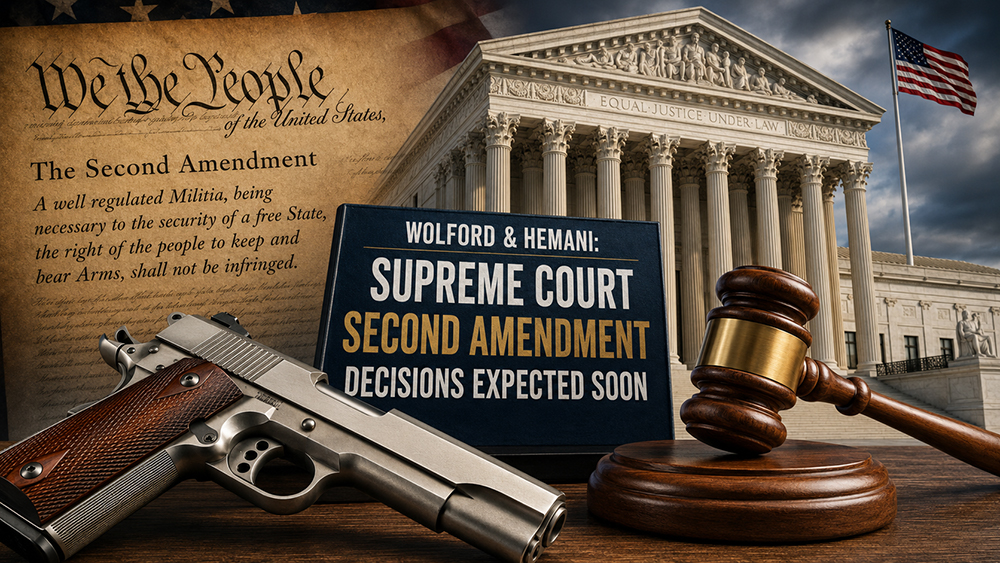
The Supreme Court’s long-awaited rulings in Wolford v. Vanderstok and Hemani v. ATF are poised to land any day now, and the stakes couldn’t be higher for the future of the Second Amendment. At issue is whether the ATF can unilaterally redefine unfinished firearm frames and receivers as “firearms” under federal law, effectively turning a decades-old regulatory gray area into a sweeping new licensing regime. If the Court sides with the government, the practical effect will be to criminalize the very tools that have allowed millions of Americans to exercise their right to keep and bear arms without first navigating a federal paperwork maze; if the Court reins in the agency, it will send a clear message that regulators cannot invent new crimes by administrative fiat.
What makes these cases especially significant is the broader pattern they reveal: an executive branch increasingly willing to stretch statutory language to achieve policy outcomes that Congress has repeatedly refused to enact. The 2A community has watched this tactic play out with pistol braces, bump stocks, and now “ghost guns,” each time with the same justification that public safety demands an end-run around the legislative process. A favorable ruling would not only protect access to 80-percent receivers but would also reassert the constitutional principle that only the people’s elected representatives may create new federal crimes—an especially urgent reminder as states and cities continue to test the limits of what they can ban without running afoul of Bruen.
For gun owners, the decisions will serve as an immediate litmus test of whether the post-Bruen Court is prepared to treat the Second Amendment as a true constitutional right rather than a second-class privilege subject to bureaucratic whim. A win would energize ongoing challenges to other ATF rules and give state attorneys general stronger footing to resist federal overreach; a loss would force the community to redouble its focus on legislation and elections to claw back ground lost to regulation. Either way, the rulings will shape the battlefield for years to come, reminding every citizen that the right to keep and bear arms ultimately depends on vigilant defense against both legislative and administrative encroachment.


