

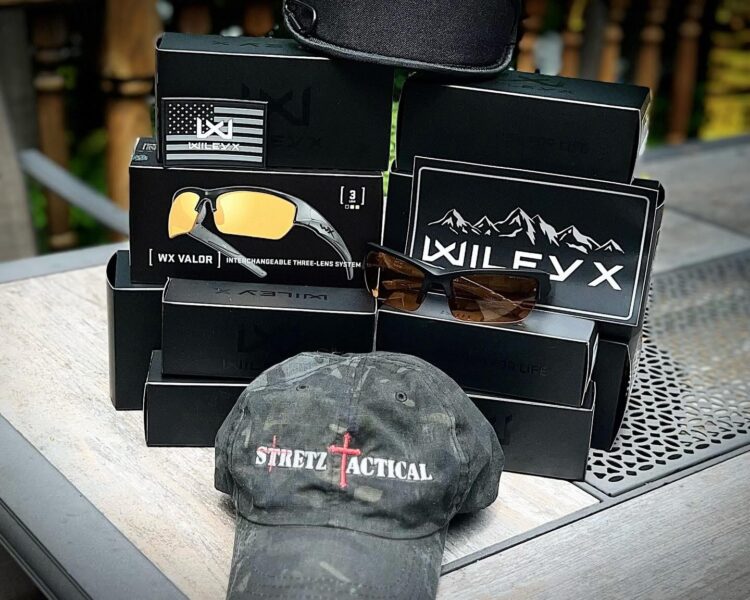
Wiley X’s story is a masterclass in what happens when American ingenuity refuses to treat protection as an afterthought. Born from a family that understood the difference between marketing claims and battlefield reality, the company has spent decades engineering eyewear that actually earns its keep when fragments, debris, or high-velocity impacts enter the equation. That second-generation continuity matters: it means institutional knowledge isn’t being diluted by quarterly earnings calls or offshore cost-cutting, so the same standards that once protected troops now serve civilians who carry, train, or simply refuse to accept that “good enough” is acceptable when your eyes are on the line.
For the 2A community this matters more than most marketing copy admits. Every range day, every competition stage, every defensive scenario carries the statistical certainty that something will fly toward your face—brass, shattered steel, or worse. Wiley X’s refusal to separate “style” from “stopping power” gives shooters gear that doesn’t force the usual trade-off between looking tactical and staying functional. In an era when some optics and accessory makers quietly offshore production or soften standards to chase volume, a family-owned U.S. firm doubling down on ballistic integrity sends a quiet but unmistakable signal: the right to keep and bear arms includes the right to keep your eyesight while doing it.
The deeper implication is cultural as much as practical. When civilians adopt the same tier of eye protection once reserved for military operators, it normalizes the idea that responsible gun owners prepare like professionals rather than hobbyists. That mindset shift strengthens the broader argument that the 2A community is defined by discipline and foresight, not recklessness. Wiley X didn’t set out to make a political statement; they simply refused to compromise on protection. In doing so, they handed the firearms culture another tool—literally and figuratively—to demonstrate that liberty and safety are not opposing forces but mutually reinforcing ones.


