
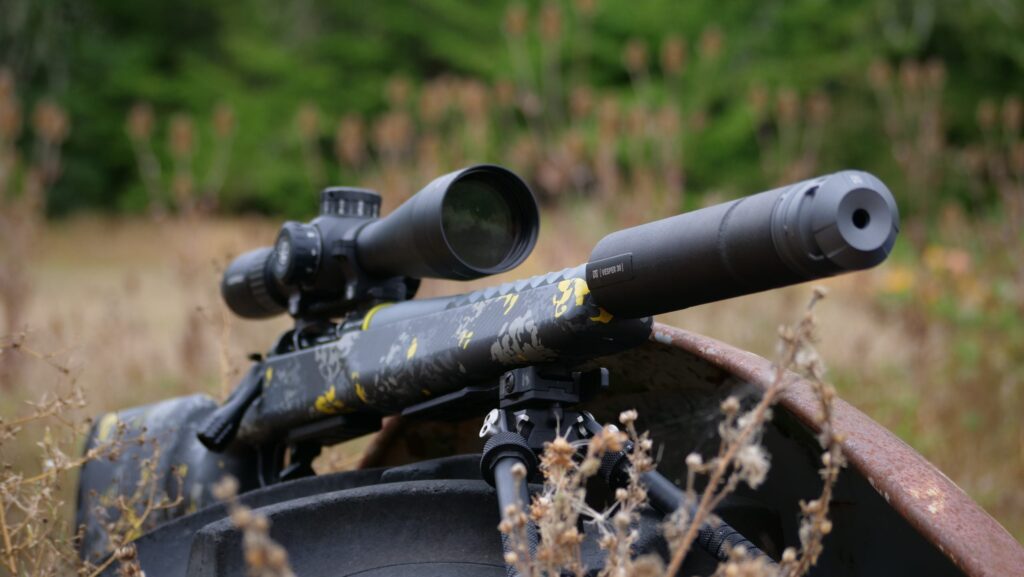
Bolt-action rifles and other manually operated firearms do not require flow-through suppressors because they lack a gas system that extra backpressure would overdrive or vent into the shooter's face. An NRL Hunter competition showed most participants using conventional high-backpressure models, frequently fitted with brakes, as they expend at most eight rounds. Flow-through units, often additively manufactured with forward gas channels, mainly benefit gas-operated rifles such as AR-15s by lowering blowback and reducing the need for adjustable blocks or heavier buffers.
A titanium .30-caliber flow-through example weighs 11.8 ounces and lists from 1299 dollars against 9.6 ounces and 999 dollars for a welded baffle counterpart. Printed one-piece models trap carbon in passages that require solvent soaks and manufacturer repairs, plus a 200-round break-in that may produce sparks.