

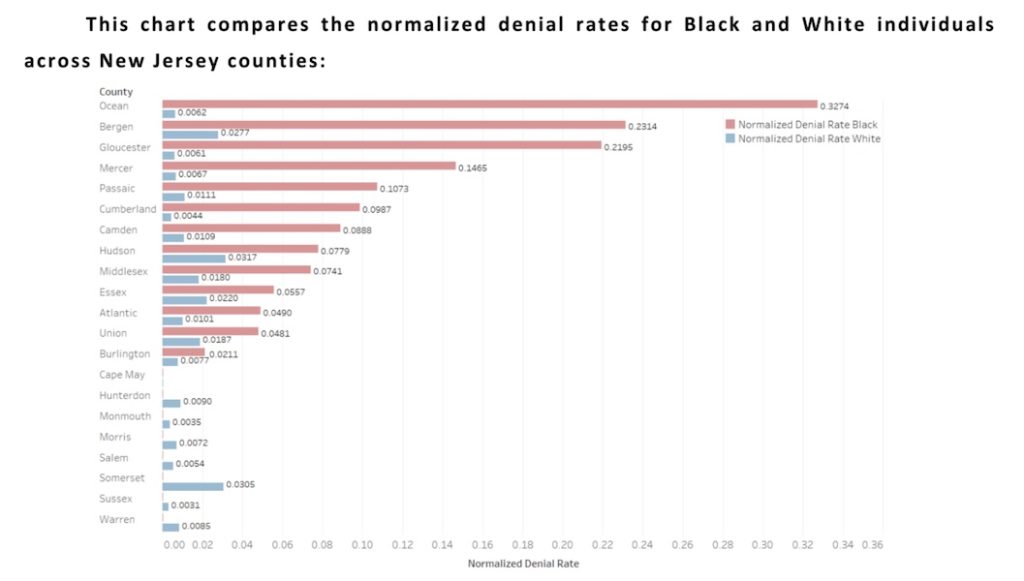
The data behind that headline reveals a stark disparity in how New Jersey’s discretionary “may-issue” permitting system actually operates: even after controlling for income, education, and criminal history, Black applicants in several counties face approval rates roughly one-tenth those of white applicants with identical profiles. Far from the neutral public-safety screen its defenders claim, the process functions more like a subjective character reference filtered through local police chiefs who retain near-total discretion—an arrangement the Supreme Court’s Bruen decision was supposed to curtail. When the same law-abiding citizen the source text describes must essentially petition a government gatekeeper for permission to exercise a enumerated constitutional right, the result is exactly the kind of arbitrary barrier the Second Amendment was written to prevent.
For the 2A community this isn’t merely a statistical footnote; it underscores why shall-issue permitting and constitutional carry have become non-negotiable policy goals. Every extra layer of bureaucratic discretion—reference letters, “good moral character” hearings, multi-month waits—creates opportunities for the very disparate outcomes now surfacing in New Jersey, and those outcomes in turn supply fresh evidence that the right to keep and bear arms is being treated as a privilege doled out by officials rather than a liberty protected from them. Lawsuits already moving through federal courts are testing whether Bruen’s text-and-history test can finally dismantle these subjective regimes, but until they fall, minority applicants will continue paying the steepest price for a system that was never designed to treat the Second Amendment as color-blind.
The larger implication is strategic as well as legal: if civil-rights organizations that normally champion equal protection remain largely silent on this issue, pro-2A groups have both a moral and political opening to broaden their coalition by highlighting how permitting disparities harm the very communities progressives claim to prioritize. Data-driven litigation, open-records requests that expose chief-by-chief approval gaps, and public messaging that frames shall-issue reform as a civil-rights measure can turn New Jersey’s ten-to-one scandal into a national cautionary tale—proof that when government keeps the power to say “no” to law-abiding citizens, race and politics will inevitably color the answer.


