

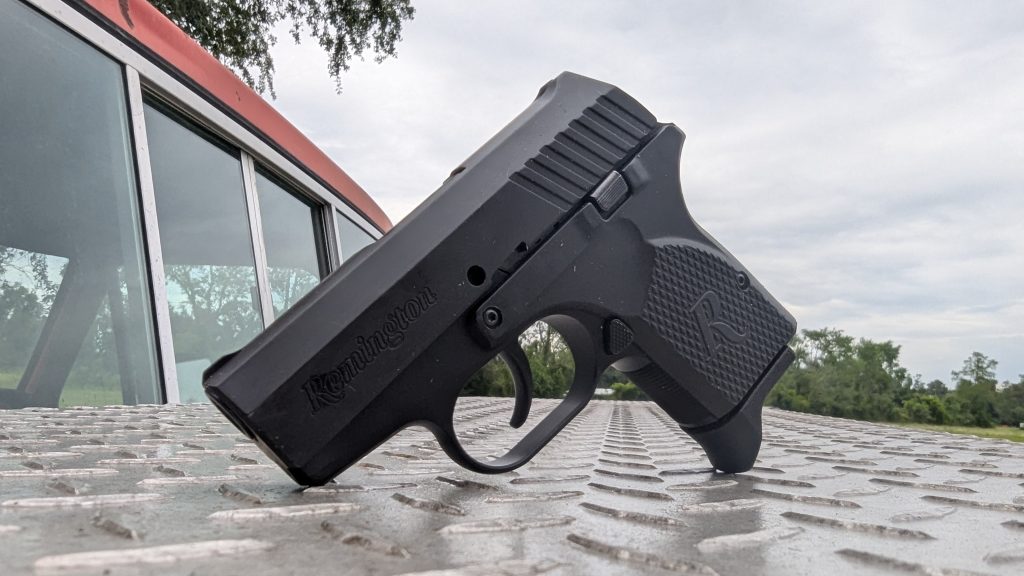
The Remington RM380 arrived at a curious moment in the company’s history, when the Freedom Group’s cost-cutting ethos was already beginning to clash with the expectations of shooters who still associated the Remington name with American craftsmanship. What could have been a straightforward pocket pistol—light, controllable, and priced to move—ended up carrying the weight of institutional decline. Its soft-shooting manners and respectable accuracy for the class hinted at untapped engineering potential, yet the gun never escaped the shadow of quality-control rumors and parts-support worries that followed every Freedom Group product. For the 2A community, the RM380 became a cautionary footnote rather than a footnote of triumph: a reminder that even a solid design can be undermined when corporate priorities drift from the end user to the balance sheet.
In hindsight, the pistol’s modest virtues underscore a larger pattern. Time and again, promising domestic designs have been starved of the sustained refinement and marketing muscle needed to compete with established micro-9s and single-stack .380s from SIG, Ruger, and Kel-Tec. Had Remington’s leadership treated the RM380 as a platform worth iterating—better sights, improved ergonomics, wider holster support—it might have carved out a durable niche among shooters who value American-made options in the deep-concealment category. Instead, the gun’s quiet disappearance reinforced a broader skepticism: when legacy brands falter, the market quickly reallocates demand toward smaller, more agile manufacturers who still treat reliability as non-negotiable. The episode quietly strengthened the argument that robust Second Amendment exercise depends not only on favorable laws, but also on a healthy, competitive domestic firearms industry capable of delivering products shooters can trust for decades.


