

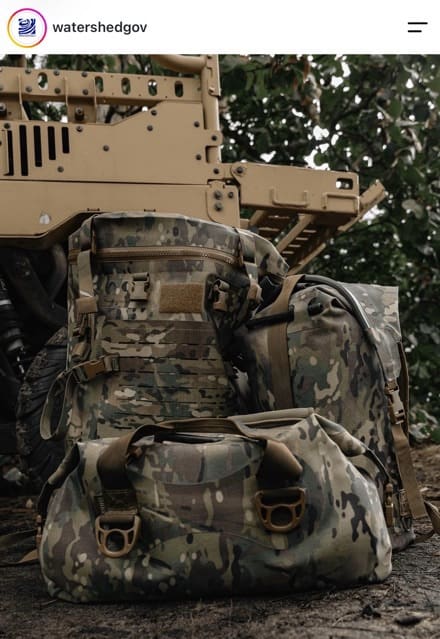
Watershed’s move onto Instagram isn’t just another brand chasing likes; it’s a calculated step to put unfiltered, real-world proof of their gear directly into the feeds of the people who stake their lives on it. By spotlighting mission applications and the operators who treat “failure isn’t an option” as daily reality, Watershed is sidestepping the sanitized marketing that dominates social media and instead letting end-users see how their packs survive salt-water insertions, mountain extractions, and everything in between. That authenticity matters in an era when legacy media still frames tactical equipment as suspect; here, the proof is visual, immediate, and impossible to dismiss as hype.
For the broader 2A community, the timing is shrewd. As platforms continue to throttle firearm-related content, brands that focus on the “soft” gear—dry bags, load-bearing systems, protective cases—can still reach audiences hungry for capability without tripping every algorithm. Watershed’s four-decade résumé gives them instant credibility with both the military/professional user base and civilians who train to the same standard. When those civilians see a former DEVGRU operator praising the same pack they just bought for a bug-out load-out, the Second Amendment ecosystem gains another node of practical validation that no amount of op-ed ink can erase.
The deeper implication is cultural as much as commercial. Every Instagram Story of a smoke-obscured range drill or a surf-tossed zodiac landing quietly normalizes the idea that rugged self-reliance gear is a legitimate extension of the armed citizen’s toolkit. In a media landscape that prefers to portray gun owners as either hobbyists or threats, Watershed’s feed offers a third image: professionals and prepared citizens who treat their equipment like the life-support system it is. That framing strengthens the argument that 2A isn’t about recreation alone; it’s about retaining the means—and the supporting kit—to operate independently when institutions falter.


