

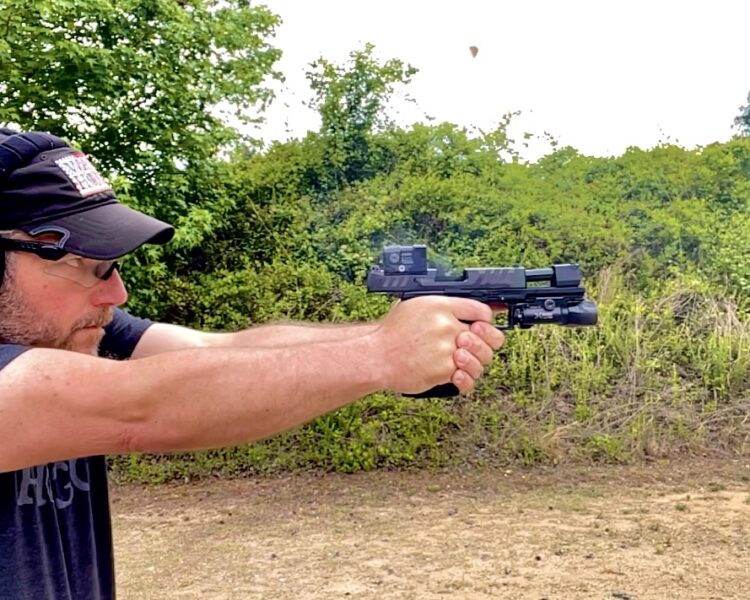
War HOGG’s latest Skill Builder #22 is a masterclass in how real proficiency isn’t built in silos but in the messy, integrated chaos of live fire. By forcing shooters to weave marksmanship fundamentals—sight alignment, trigger control, grip, and follow-through—into a single, fluid drill, the program exposes the gap between “range perfect” and “pressure perfect.” The genius lies in its structure: assess, plan, dry-fire, then measure. It’s not just a test; it’s a diagnostic that reveals whether your training has been honest or merely performative. For the 2A community, this matters because legal carry and defensive scenarios don’t offer the luxury of isolated fundamentals; they demand seamless execution under stress, and drills like this are the closest civilian proxies we have to that reality.
What makes this approach especially potent is its rejection of the “set it and forget it” mindset that creeps into even dedicated shooters. Monthly skill builders create a cadence of deliberate discomfort—each iteration recalibrates expectations and prevents the complacency that comes from repeating the same comfortable courses of fire. In an era where training ammo costs and range access can be barriers, the emphasis on dry-fire planning before live validation is both pragmatic and subversive: it democratizes high-level skill development by leveraging the cheapest, most accessible tool in the box. The 2A community often debates hardware versus mindset; War HOGG’s method quietly settles the argument by proving that disciplined, integrated practice beats gear upgrades every time.
The broader implication is cultural. When shooters treat skill-building as cyclical rather than linear, they internalize the idea that rights come with responsibilities—chief among them, the duty to remain competent. This drill doesn’t just improve marksmanship; it reinforces the narrative that armed citizens are defined not by what they carry, but by how rigorously they train to carry it. In a political climate where every range visit can be framed as preparation or provocation, War HOGG’s approach arms advocates with something more powerful than talking points: measurable, defensible proficiency that undercuts the “gun owner as liability” trope. The result is a community that doesn’t just own firearms but owns the standard of excellence that justifies that ownership.


