
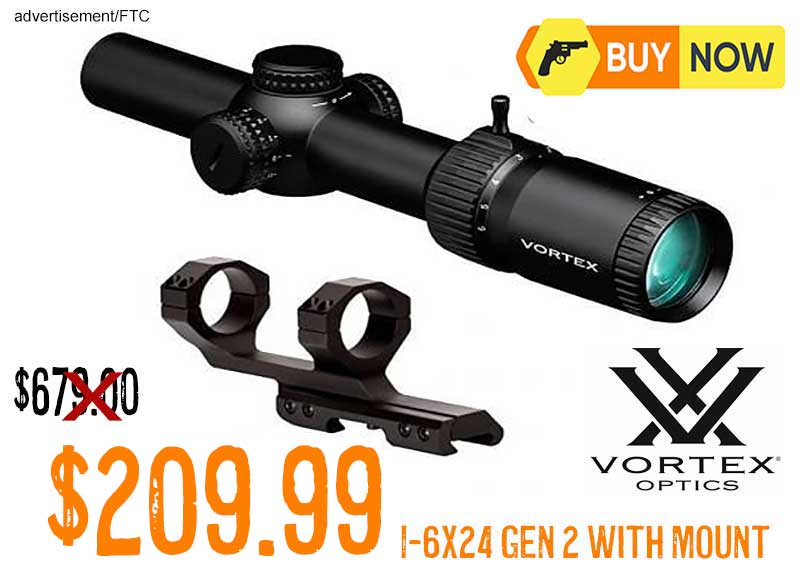
The Vortex Strike Eagle 1-6×24 Gen II package hitting the market at just $209.99 represents more than a fire-sale price—it’s a direct shot across the bow of the optics industry’s long-standing “you get what you pay for” pricing model. At roughly two-thirds off, this illuminated second-focal-plane LPVO bundles a true daylight-bright reticle, push-button illumination, and a cantilever mount that lands the optic at the correct height for AR-platform rifles. For the 2A community that has watched premium glass prices climb faster than inflation, the deal underscores how competition and direct-to-consumer channels are finally forcing legacy margins to give ground without sacrificing the core features that matter on a defensive or competition carbine.
Beyond the sticker shock, the timing is telling. With millions of new AR owners entering the ecosystem post-2020 and states continuing to test magazine-capacity and feature bans, an affordable, rugged 1-6× optic lowers the barrier for building a do-it-all rifle that can still make precise hits past 300 yards. The included mount eliminates an extra $60–$80 purchase, meaning a first-time builder can now field a complete, illuminated LPVO setup for less than the cost of many red-dot-only configurations just a few years ago. That accessibility matters: it keeps the focus on training and marksmanship rather than nickel-and-diming shooters out of an optic that actually enhances their rifle’s capability.
For Second Amendment advocates, the deeper implication is cultural as much as economic. When a respected American optics brand like Vortex can profitably sell a feature-rich LPVO at under $210, it signals that volume and brand loyalty can coexist with responsible pricing—something gun-control advocates rarely acknowledge when they claim the industry is driven solely by profiteering. The Strike Eagle deal quietly reinforces that innovation plus competition, not regulation, is what expands access to modern defensive tools. In short, the 67 % discount isn’t just a bargain; it’s evidence that the market is still working in favor of an armed populace that values both performance and value.


