

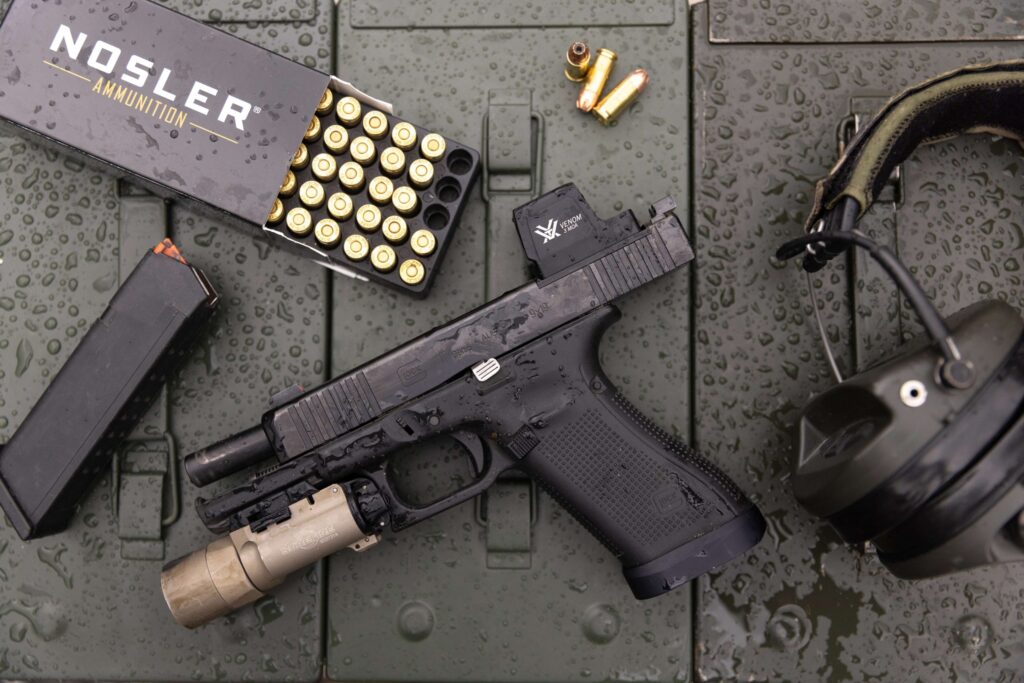
Vortex’s decision to add a 3 MOA green-dot version to the Venom enclosed-emitter family is more than a simple color swap; it’s a tacit admission that red-dot dogma has real-world limits. In bright desert sun or under the cool-white LEDs of an indoor range, green often snaps into focus faster for shooters whose eyes skew toward the blue end of the spectrum—an advantage that can shave decisive fractions of a second when a stage timer is running or a threat is closing. By keeping the same rugged, enclosed architecture that shrugs off dust, rain, and holster wear, Vortex is effectively telling competitors that “one-size-fits-all” red dots are yesterday’s spec, not tomorrow’s standard.
For the broader Second-Amendment community the move matters because it widens the aperture of viable defensive and competition choices without forcing shooters into the higher price bracket of boutique European micro-optics. The Venom’s continued sub-$300 street price, now available in both red and green, lowers the barrier for first-time enclosed-emitter buyers who want modern reliability without surrendering their lunch money. In an era when state-level capacity and carry restrictions ebb and flow, having an optic that stays zeroed through everyday carry, class-III matches, and the occasional rain-drenched hunt is a quiet but tangible force-multiplier for lawful gun owners who refuse to cede capability to regulatory creep.
Ultimately, the green Venom signals that American shooters—and the companies that serve them—are done waiting for legacy European brands to trickle down incremental improvements. By iterating quickly, publishing specs in plain English, and pricing for volume, Vortex is reinforcing a distinctly home-grown ecosystem in which freedom of choice extends all the way to the color of the dot projected between your eyes and the target.


