

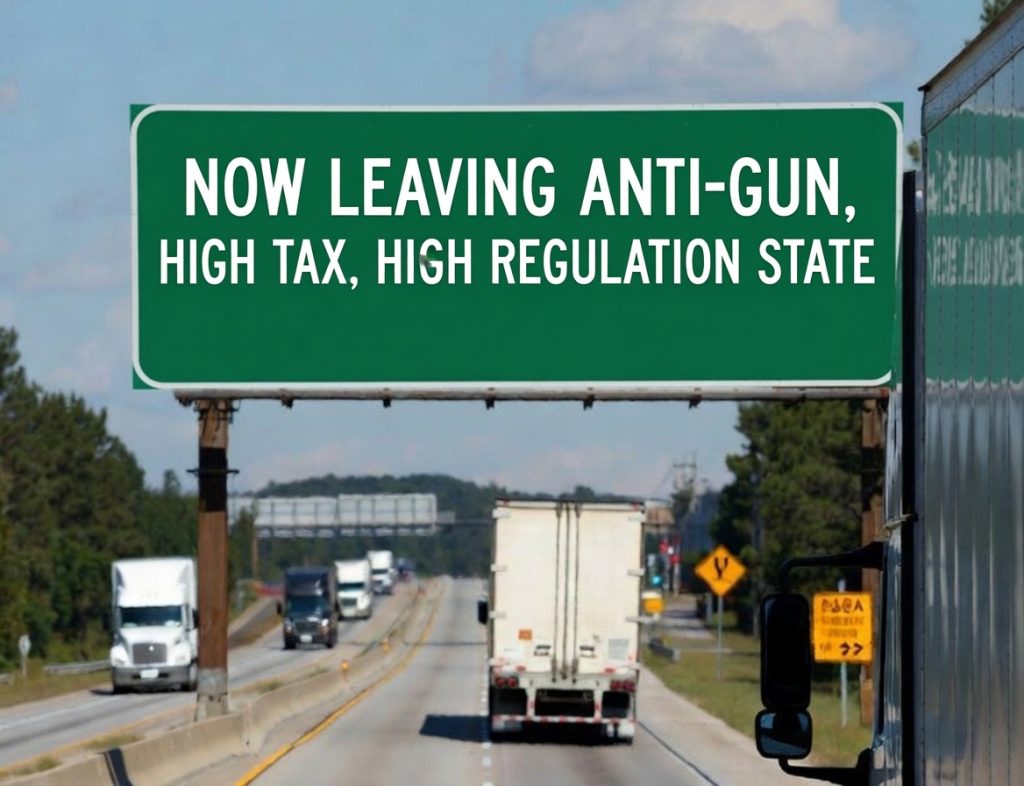
Virginia’s latest round of anti-industry legislation is accelerating a migration that’s been building for years, as manufacturers weigh the cost of doing business in states that treat the Second Amendment like a regulatory nuisance rather than a constitutional cornerstone. Companies aren’t just fleeing taxes or red tape; they’re escaping a political climate where every expansion, every new hire, and every product line risks becoming a campaign issue for politicians eager to score points with coastal donors. The result is a quiet but decisive realignment: states that once hosted major production hubs are watching skilled jobs, supply chains, and tax revenue relocate to places where the right to keep and bear arms is still treated as settled law rather than a bargaining chip.
This isn’t merely a corporate relocation story; it’s a market verdict on which jurisdictions value constitutional consistency over performative gun control. When manufacturers move, they take with them not only payrolls but also the institutional knowledge and innovation clusters that keep American firearms competitive on the global stage. Blue-state officials may celebrate the departure as a moral victory, yet the data shows shrinking local economies and rising unemployment in former gun-industry strongholds, while red and purple states reap the benefits of steady investment and workforce growth. For the 2A community, the takeaway is clear: economic pressure is proving more effective at protecting manufacturing capacity than lawsuits alone, and every new factory floor in a friendly jurisdiction strengthens the infrastructure that sustains lawful ownership for generations.
The longer-term implication is a hardening geographic divide in which access to domestically produced firearms increasingly tracks political geography. Law-abiding citizens in restrictive states may still purchase products made elsewhere, but the trend underscores how policy choices can erode domestic capacity and push production—and the skilled labor behind it—toward more hospitable terrain. As more companies follow the same logic that drove earlier exits from California and New York, the 2A community gains both a cautionary tale and a strategic map: support jurisdictions that treat the firearms sector as an economic asset rather than a target, because the health of that sector ultimately determines how readily future generations can exercise their rights with American-made arms.


