

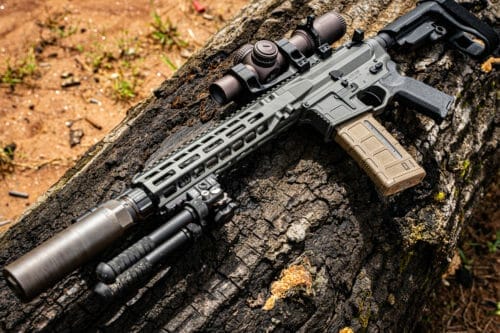
A federal judge’s clarification that the Santolla v. Katz injunction now blankets the entire Commonwealth is more than a procedural footnote—it’s a statewide stay of execution for Virginia’s latest attempt to criminalize the most popular rifle platform in America. By confirming that Spanberger’s semi-auto and magazine restrictions cannot be enforced anywhere in the state while the NRA-backed challenge proceeds, the court has effectively told Richmond that geography will not be used as a workaround to sidestep constitutional scrutiny. That single ruling transforms what could have been a patchwork of local compliance headaches into a uniform shield for every law-abiding Virginian who owns an AR-15 or a standard-capacity magazine.
The decision also underscores how fragile these “assault-weapon” schemes remain once they face even modest judicial review. Virginia’s ban was sold as a public-safety measure, yet the same politicians who pushed it have offered no evidence that magazine capacity or feature bans reduce crime—only that they inconvenience the 20-plus million law-abiding owners nationwide who choose modern semi-automatics for sport, defense, and collecting. The statewide block keeps those owners from being turned into instant felons and preserves the practical effect of Heller and Bruen: that bearable arms in common use enjoy presumptive protection. For the broader 2A community, the ruling is a reminder that persistent litigation, not just elections, remains the most reliable backstop when statehouses chase national headlines with unconstitutional copy-paste legislation.
Looking ahead, the case will test whether Virginia’s attorney general can manufacture a new rationale that survives strict scrutiny or whether the ban will ultimately join the growing graveyard of post-Bruen losses. Either outcome will send ripples far beyond the Old Dominion; a final victory here would further narrow the menu of viable restrictions other states can attempt, while a reversal would energize copycat efforts in neighboring legislatures. For now, the message to gun owners is clear: the courts are still listening, and the fight to keep politically disfavored firearms in common use is very much alive.


