

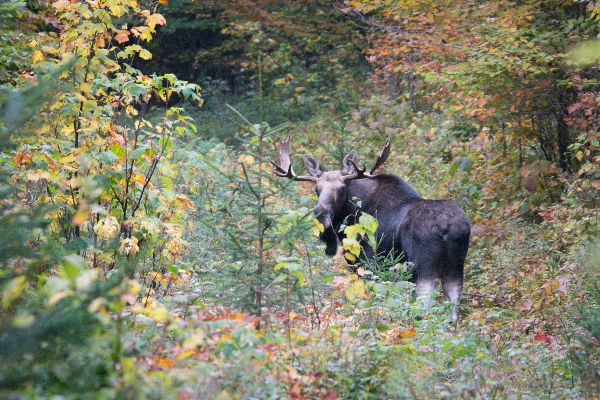
Vermont’s decision to open a tightly controlled moose lottery in Wildlife Management Unit E is a textbook case of wildlife managers using regulated harvest to correct an ecological imbalance created by decades of hands-off policies. By capping the 2026 season at 85 total permits—65 either-sex and 20 antlerless—the state is acknowledging that unchecked moose numbers have fueled an explosion of winter ticks, a parasite whose life cycle thrives on dense host populations. The $10 resident and $25 nonresident application fees keep the process accessible while still generating modest revenue that funds the very biologists who set science-based quotas, a reminder that user-pay models work when government stays within constitutional bounds.
For the 2A community this isn’t merely a hunting story; it’s a live demonstration that sustainable use, rather than preservationist absolutism, keeps both game species and sporting traditions healthy. Every Vermonter who draws a tag this June 17 deadline is exercising a fundamental liberty that traces directly to the Second Amendment’s protection of arms suitable for the field as well as the hearth. When anti-hunting activists push to shrink seasons or ban certain firearms, they ignore the data Vermont is now citing: without hunters, moose herds suffer boom-and-bust cycles that ultimately reduce biodiversity and increase taxpayer-funded interventions. The lottery therefore doubles as quiet proof that the right to keep and bear arms includes the right to responsibly manage wildlife with those same arms.
The broader implication is that 2A advocates should treat every state moose, deer, or turkey draw as contested ground. Each permit sold, each hunter afield, and each dollar returned to conservation reinforces the argument that firearms owners are the original and still most effective environmental stewards. If Vermont’s tick-reduction strategy succeeds, expect neighboring states to copy the model; if it falters under political pressure, the same activists will cite “over-abundant” moose as justification for further restrictions on hunters and the tools they carry. Either way, the June 17 deadline is less about one season and more about whether the constitutional framework that allows citizens to hunt will continue to shape wildlife policy for generations to come.


