

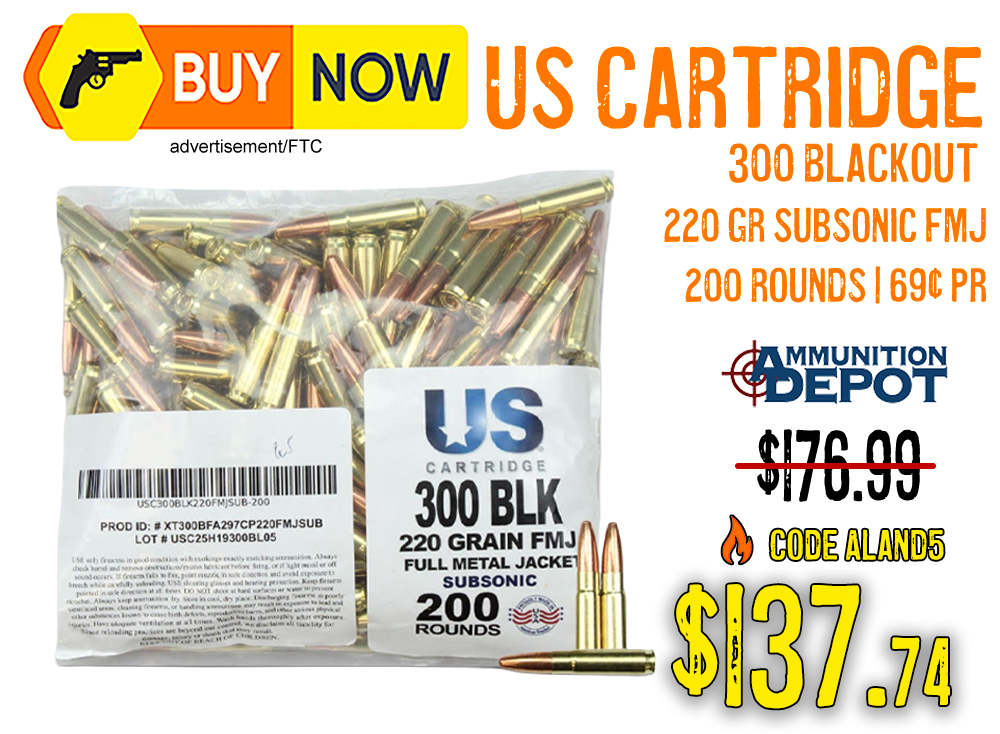
US Cartridge’s 220-grain subsonic .300 Blackout FMJ load at roughly 69 cents per round is more than a weekend sale—it’s a quiet signal that domestic manufacturers are finally scaling production to meet the sustained demand that followed the 2020-2022 panic-buying cycle. For years, subsonic 300 BLK was either imported or priced like boutique match ammo; now a U.S. maker is shipping two-hundred-round battle packs that let suppressed SBR and pistol owners train without the financial sting that once kept many rifles in the safe. The math matters: at that price, a carbine course, a suppressor break-in session, and a monthly range trip no longer compete with mortgage payments, which is exactly how rights are exercised rather than merely owned.
Beyond the checkout page, the round’s full-metal-jacket profile and sub-1,050-fps velocity keep it squarely in the training-and-plinking lane, sidestepping the political optics that surround defensive hollow points while still letting shooters validate zero, practice malfunction clearance, and confirm can compatibility. That utility feeds directly into the broader 2A ecosystem—more trigger time means tighter groups, faster reloads, and the muscle memory that turns a regulated firearm into a proficient tool instead of a safe queen. When manufacturers price access this low, they’re not merely moving product; they’re underwriting the everyday competence that courts and legislators notice when they weigh “common use” arguments under Bruen.
For the community, the real headline is volume: two hundred rounds at this cost removes the artificial scarcity that once rationed subsonic practice, letting new suppressor owners and budget builders shoot the same round count as the high-end crowd. That levels the experiential field, reduces the intimidation factor for first-time SBR buyers, and quietly strengthens the data point that .300 Blackout has moved from niche experiment to mainstream defensive and training choice. In short, US Cartridge just made it cheaper to stay proficient, and in the current legal climate, proficiency is the best form of advocacy you can carry to the range.


