

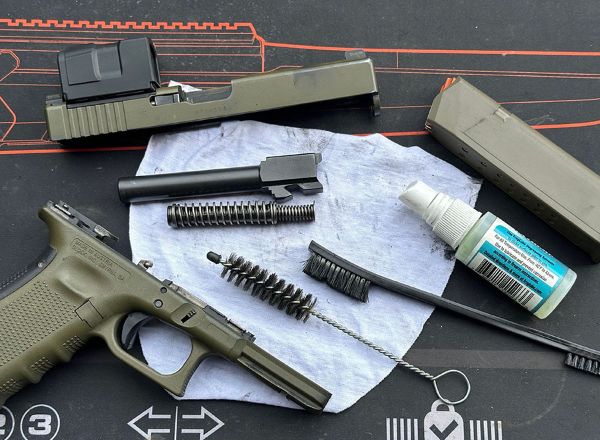
As I was writing a different article, the subject of gun cleaning, maintenance, and properly lubricating firearms popped into my head. That led me down memory lane back to 1987 and my time on Parris Island with the then-new M-16A2. The levels to which we went to prepare our rifles for “final turn-in” bordered on psychosis when you step back and consider what we did. Of course, when you’re a Private, you don’t question what you’re told, you just go along with the program trusting that those who are in charge know what they’re doing (I know). Nonetheless, now that I have the benefit of time and hindsight, some of what we were told to do would be viewed by any sane human as rather extreme—yet that same obsessive attention to detail is exactly what forged a generation of shooters who still treat their rifles like extensions of their own bodies. The Marine Corps didn’t just teach us to clean; it taught us that a rifle that fails is a Marine who fails, an ethos that quietly underpins the modern 2A argument that responsible ownership demands competence, not just possession.
Today’s civilian gun owner faces a very different calculus: we’re told by some manufacturers that modern coatings and metallurgy have made daily scrubbing obsolete, while others still push the “clean after every range trip” gospel. The truth sits somewhere in the middle, and the Parris Island experience offers a useful filter—those recruits weren’t cleaning for accuracy or longevity so much as for the ritual of accountability that turns a tool into a trust. When we over-clean today, we risk wearing out small parts and finishes that were designed to run dirty; when we under-clean, we flirt with the same stoppages that would have earned a recruit extra duty. The 2A community benefits when we treat maintenance as a skill rather than a superstition, because an armed citizenry that can’t keep its guns running is an armed citizenry that can be disarmed by its own neglect.
That lesson scales beyond the individual rifle. If the right to keep and bear arms is to remain credible, it must be paired with a culture that values function over flash—where the same discipline once drilled into boots on Parris Island now keeps defensive firearms ready in nightstands and truck consoles across the country. The recruits who once buffed carbon off gas tubes with Q-tips and CLP weren’t just preparing for inspection; they were internalizing the idea that freedom’s hardware requires upkeep. In an era when anti-2A voices claim civilian ownership is inherently reckless, the quiet counter-argument is the gun owner who still runs a bore snake after every session and can field-strip in the dark. That habit, born in the exaggerated rituals of 1987, remains one of the most practical defenses of the Second Amendment we have.


