

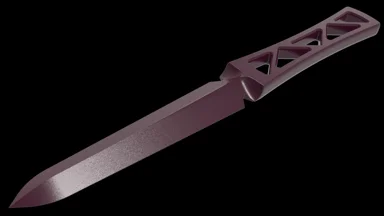
The Throat Shank from Laffs Dynamics is a stark reminder that the 3D-printing revolution in firearms isn’t limited to AR-15 lowers or Glock frames; it’s now reaching the most intimate, lethal distances imaginable. By stripping away marketing gloss and calling the object exactly what it is, the designer forces the 2A community to confront a hard truth: once the tooling is democratized, the only remaining gatekeeper is the individual’s own restraint. The blade’s deliberately thin profile and high-density PLA+ recipe aren’t just engineering notes—they’re a calculated bet that a few dozen cents’ worth of filament, printed overnight, can outperform a traditional fixed-blade in the single scenario that matters most to someone who truly believes their life is on the line.
What makes the design noteworthy isn’t its lethality per se, but the philosophical payload it carries. The explicit instruction to “melt it down afterwards” is more than operational security theater; it’s an implicit acknowledgment that the Second Amendment’s protections extend to objects that never see a Form 1 or a background check. In a world where eight states already treat undetectable knives the same way they treat ghost guns, the Throat Shank becomes both a technical prototype and a legal stress-test. Pro-2A advocates who have spent the last decade litigating the right to keep and bear arms now find themselves having to articulate why the same logic should—or shouldn’t—apply to a single-use, flesh-specific weapon that can be printed, used, and atomized before law enforcement even opens a case file.
For the broader culture war over technology and self-defense, this little neck dagger is Exhibit A that the slope really is slippery, but not in the way gun-control advocates claim. The danger isn’t that millions of citizens will suddenly start printing throat punches; it’s that the Overton window on what counts as an “arm” keeps expanding, and the legal system is still arguing from 18th-century grammar. Every new design that hits the gray zone forces courts, legislators, and activists to decide whether the right to keep and bear arms includes the right to keep and bear ideas—because, as the designer’s sign-off reminds us, you can’t kill an idea.


