

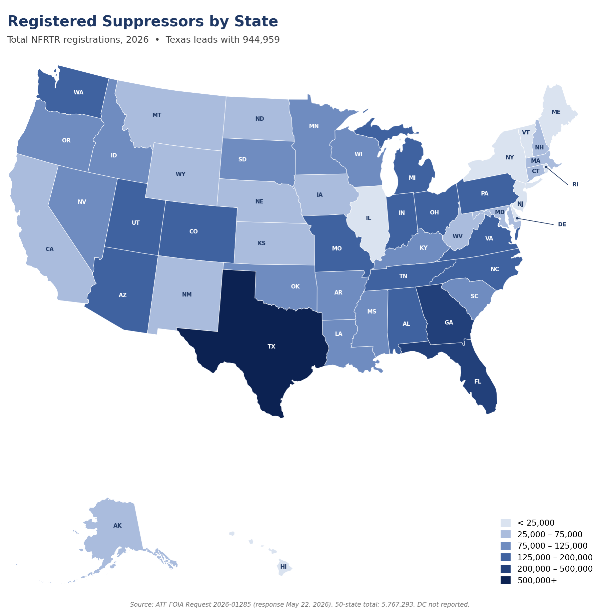
America’s suppressor landscape is far more than a collection of Form 4s and tax stamps—it’s a living map of how state laws, culture, and enforcement priorities shape the right to hear protection. States that once treated suppressors as exotic contraband now see them as mainstream safety tools, while others cling to outright bans that treat a muffler like a machine gun. The data reveal clusters of ownership in rural counties where hunting culture and long-range shooting already dominate, but they also show surprising suburban growth wherever legislatures have finally repealed “silencer” prohibitions. That geographic spread matters: it proves that once the paperwork barrier drops, demand follows almost immediately, turning a formerly niche accessory into standard equipment for anyone serious about preserving their hearing.
For the broader Second Amendment community, the map is both validation and warning. Validation because it demonstrates that mainstream acceptance grows when people can actually see and handle the hardware; warning because it highlights how uneven state regimes still create an archipelago of rights instead of a uniform constitutional baseline. Suppressors are the clearest current example of how regulatory friction—not safety data—drives policy, and the counties lighting up on the map are the ones that have simply decided to stop pretending a few extra decibels of blast are more dangerous than permanent hearing loss. As more legislatures watch neighboring states thrive without the old restrictions, the remaining bans look increasingly like arbitrary leftovers rather than thoughtful public-safety measures.


