

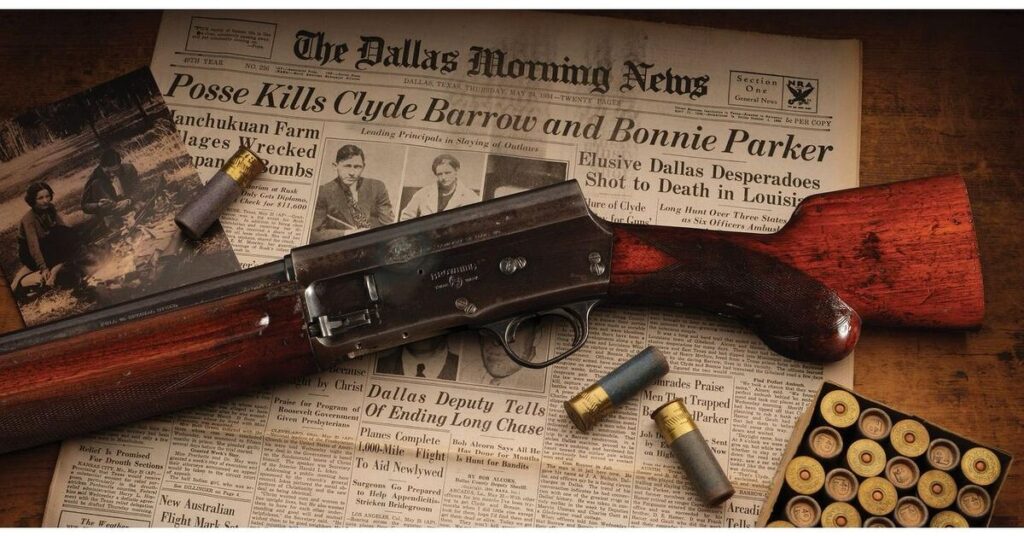
The Whippet shotgun that once rode in the trunk of Bonnie and Clyde’s stolen Ford is more than a relic of Depression-era outlawry; it is a tangible reminder that the right to keep and bear arms has always been exercised by both the law-abiding and the lawless. When the Barrow Gang packed that compact, pump-action 20-gauge beneath a blanket, they were exploiting the same constitutional guarantee that allowed farmers to keep a side-by-side in the kitchen corner for rattlesnakes and revenue agents. The gun’s survival—serial numbers intact, provenance documented—underscores how durable the tools of self-defense can be when government tries to confiscate them after the fact. Today the piece heads to auction not as a trophy of criminality, but as evidence that an item’s moral value is determined by the citizen who holds it, not by bureaucratic pedigree papers.
For the 2A community, the Whippet’s impending sale crystallizes a deeper truth: prohibitionist logic collapses when history shows that “common use” firearms have always cut both ways. The same pump-gun architecture that Clyde Barrow favored for rapid follow-up shots remains the defensive choice of millions of homeowners who will never rob a bank. Collectors who secure the piece are preserving more than metal and wood; they are archiving an era when federal agents openly debated whether to disarm the citizenry or simply out-shoot the outliers—an argument that echoes in every modern magazine-ban hearing. Far from glamorizing crime, the auction invites us to measure progress not by how many guns we can take off the street, but by how responsibly an armed populace continues to police itself.


