

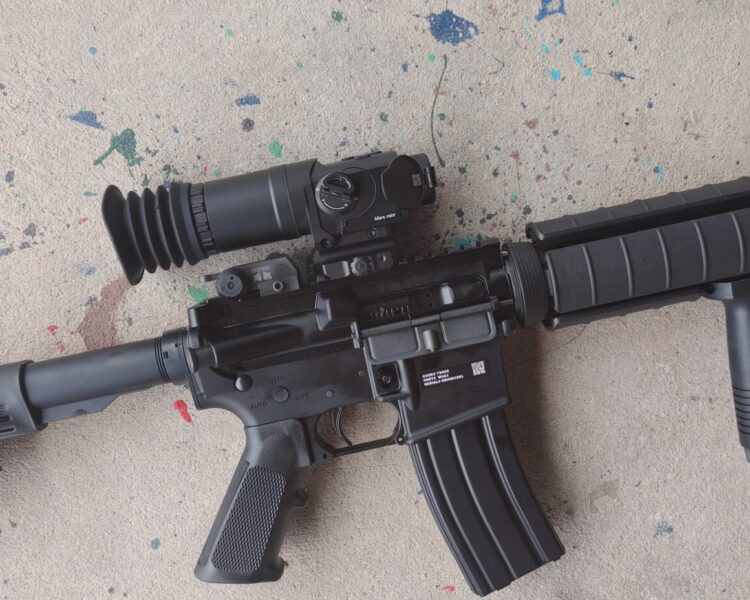
The MARS Mini isn’t just another gadget for the night-vision crowd—it’s a signal that thermal technology is finally escaping the “truck gun only” category and sliding into everyday carry consideration. By shrinking a military-grade sensor into a package light enough for a pistol slide or compact rifle, the designers have removed the old excuse that thermals were too bulky or power-hungry for anything short of a precision rig. For the 2A community that already treats low-light proficiency as a baseline skill, this means the same shooter who carries a red-dot-equipped 9 mm at dusk can now add passive heat detection without swapping platforms or adding pounds of NODs. That shift quietly expands the practical envelope of self-defense from “see the threat” to “identify the threat before it sees you,” an edge that matters when most violent encounters happen in the gray hours between sunset and sunrise.
Beyond the hardware itself, the MARS Mini underscores how quickly civilian access to once-restricted sensors is outpacing regulatory imagination. Where earlier thermals carried export-controlled cores and eye-watering price tags, this unit’s miniaturization suggests economies of scale that could push capable units below the psychological $2,000 barrier. That price compression doesn’t just sell more scopes; it normalizes the idea that private citizens should own the same detection tools fielded by patrol officers and ranchers protecting livestock from predators. In a policy environment where magazine bans and “assault weapon” rhetoric dominate headlines, the quiet proliferation of thermal optics serves as a reminder that the right to keep and bear arms includes the right to see in the dark—an argument the community can wield when future rules attempt to draw lines between “hunting” and “tactical” thermals.


