

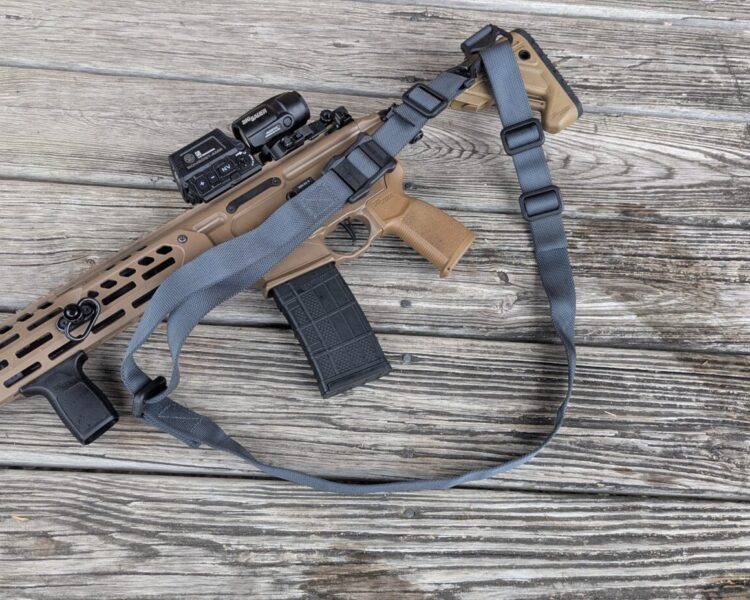
The Magpul MS1 didn’t just fill a gap in the sling market; it quietly rewrote the rules for how everyday shooters expect their gear to perform under pressure. Where older designs forced users into awkward adjustments or relied on metal hardware that could clang or snag, the MS1’s quick-adjust slider and polymer construction deliver silent, one-handed length changes that keep both hands on the gun when seconds matter. That shift from “good enough” to “actually intuitive” reflects a broader industry trend: companies listening to end-users who train like their lives depend on it, because for many in the 2A community, that’s not hyperbole.
What makes the MS1’s reception so telling is how it exposed the gap between military-surplus nostalgia and modern civilian practicality. Shooters who once defaulted to vintage web gear discovered that a sling could be comfortable for all-day carry, rapidly convertible between two-point and single-point configurations, and still tough enough for hard use without adding unnecessary ounces. In an era when state-level restrictions on magazine capacity and feature bans keep tightening, accessories like the MS1 become force multipliers—tools that let a standard-capacity rifle remain fast, controllable, and user-friendly even when the platform itself is under legislative siege.
For the broader 2A ecosystem, the MS1’s success signals that innovation thrives when the market, not regulators, sets the performance bar. Every time a shooter masters a smooth transition or stays on target because the sling didn’t fight them, it reinforces the argument that responsible gun owners invest in training and quality equipment rather than waiting for permission slips. That mindset turns a simple piece of nylon and polymer into quiet but tangible proof that the right to keep and bear arms includes the right to keep and bear gear that actually works.


