

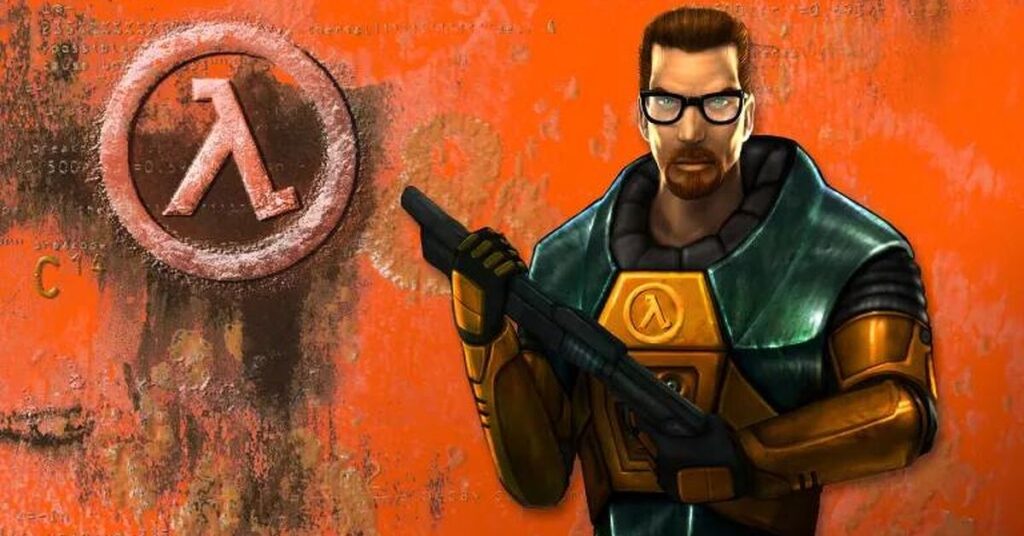
Half-Life’s arsenal was a fever dream of late-90s game design, where the need for escalating spectacle trumped any nod to real-world ballistics or ergonomics. The iconic MP5 was reimagined as a full-auto laser pointer that never overheated, while the shotgun could somehow chamber a dozen shells without ever needing a reload animation longer than a blink. Even the “Tau Cannon,” a supposed experimental particle weapon, looked like a plumbing accident strapped to a car battery. These choices weren’t just lazy shortcuts; they reflected an era when developers treated firearms as props rather than tools, and the audience was happy to suspend disbelief for the sake of the next set-piece.
That disconnect matters to the 2A community because it shaped how millions of non-shooters first “handled” guns. For a generation raised on Gordon Freeman’s crowbar-to-rocket-launcher progression, the idea that a firearm could be both safe and effective was never modeled; instead, guns were either comically over-powered or narratively irrelevant. When today’s debates rage over magazine capacity or “assault weapon” features, the cultural memory still carries echoes of these pixelated exaggerations—memories that gun-control advocates weaponize with phrases like “military-grade weapons of war.” The Half-Life mythos helped normalize the notion that civilian-legal arms are interchangeable with sci-fi death machines, a narrative the industry has spent two decades trying to un-write.
Yet the same games also planted seeds of curiosity. Players who later handled a real MP5 or 12-gauge often experienced a quiet epiphany: the kick, the weight, the mechanical rhythm were nothing like the digital version. That moment of recalibration is quietly subversive; it turns passive consumers of entertainment into active students of the platform. In an age when legacy media still traffics in Half-Life-grade misconceptions, every range trip, every Appleseed event, every new shooter who learns the difference between a semi-auto and a “machine gun” becomes its own form of cultural remediation—proof that lived experience remains the best graphics upgrade of all.


