

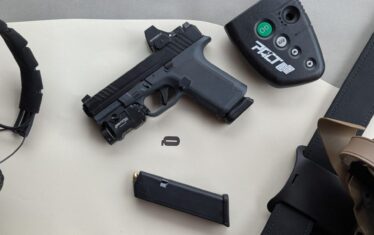
The Failure to Stop drill didn’t earn its legendary status by accident—it was born from the hard truth that one or two rounds rarely end a lethal encounter. Developed in the late 1980s by instructors who had seen too many real-world shootings, the drill forces shooters to deliver a rapid pair to the chest, assess, and then follow up with a precise head shot if the threat is still advancing. That sequence mirrors what countless after-action reports reveal: determined attackers often ignore center-mass hits, whether because of adrenaline, drugs, or body armor. By baking the “failure” into the drill’s very name, trainers stripped away the Hollywood fantasy of the single, magically incapacitating shot and replaced it with a repeatable, stress-induced habit that actually works when everything else goes wrong.
For the 2A community, the drill’s deeper value lies in how it reframes training priorities. Instead of obsessing over caliber debates or the latest optic, shooters learn that shot placement under time pressure and the willingness to shoot until the threat stops are what actually save lives. Departments that adopted Failure to Stop protocols saw measurable drops in rounds expended and increases in hits on target, proving that mindset and repetition trump gadgetry. The same principle scales to civilian carriers: if your qualification or practice never includes failure-to-stop iterations, you’re rehearsing a best-case scenario that rarely exists outside the square range.
Ultimately, the drill is a quiet rebuke to complacency. It reminds every gun owner that the legal and moral standard isn’t “I fired until my magazine was empty,” but “I fired until the threat ended.” That standard demands honest self-assessment—can you make that head shot at seven yards when your heart rate is 160 and the timer is running? If the answer is no, the Failure to Stop drill isn’t just another range game; it’s the difference between carrying with confidence and carrying with hope.


