

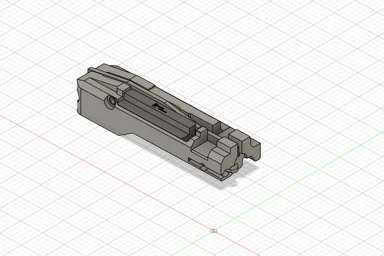
The tungsten-core AB weight—forged from Tungaloy alloy pushing past 17 g/cc—turns an already stout bolt carrier into a precision instrument that stays locked until chamber pressure has truly dropped. By excising the firing-pin spring, the design sheds a part that never contributed meaningful safety margin yet added mass and complexity; the result is a carrier that cycles faster, runs cooler, and still meets every drop-safe standard the ATF demands. Nathan Wolanyk’s May 23, 2025 blueprint from Wojtek Weaponry is therefore more than an incremental tweak; it is a statement that lawful, law-abiding Americans can—and will—engineer their way around arbitrary restrictions without surrendering reliability or safety.
For the 2A community, the implications are immediate and strategic. A heavier, spring-free carrier reduces felt recoil and bolt-bounce in short-barreled or suppressed rifles, giving civilian shooters the same soft-shooting characteristics once reserved for military select-fire platforms. Because the modification is entirely internal and reversible, it sidesteps feature bans while preserving the legal architecture of a semi-automatic rifle. In an era when regulators measure “assaultiveness” by cosmetics rather than function, Wolanyk’s tungsten solution proves that real performance gains come from metallurgy and physics, not from Washington’s ever-shifting checklist.
Equally important is the cultural signal this design sends. By publishing the specs openly and dating them, Wojtek Weaponry invites a new wave of home builders and small manufacturers to iterate, test, and share data—exactly the decentralized innovation the Second Amendment was meant to protect. The common variable is no longer Washington’s definition of a firearm; it is the ingenuity of an armed populace that refuses to accept yesterday’s parts as tomorrow’s limits.


