

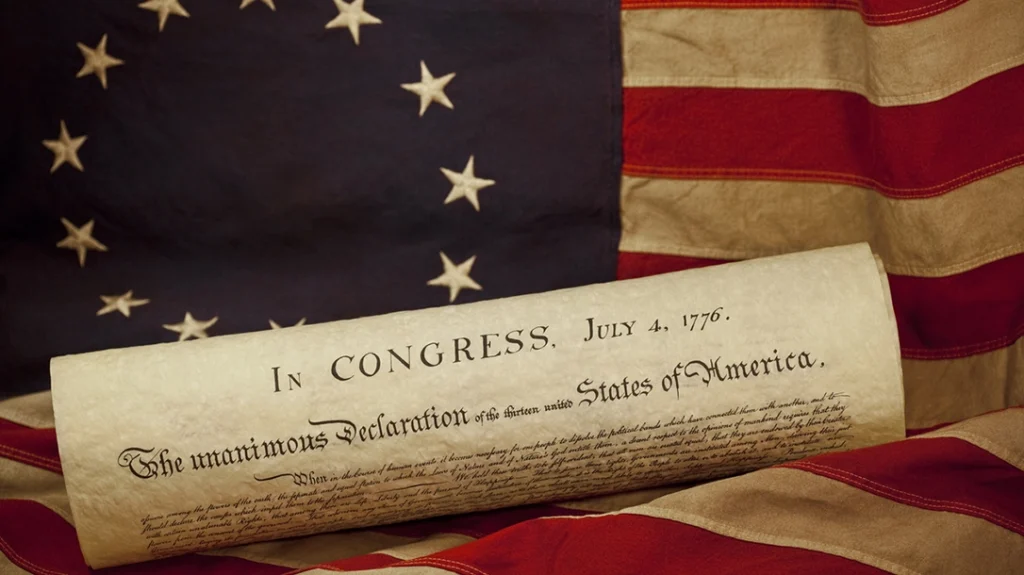
When the Continental Congress adopted the Declaration of Independence on July 4, 1776, it did more than sever ties with the Crown—it codified the radical idea that rights are not gifts from government but endowments from the Creator that no ruler may lawfully revoke. That single sentence—“that all men are created equal, that they are endowed by their Creator with certain unalienable Rights”—shifted the moral center of political legitimacy from the throne to the individual, and it is precisely this premise that the Second Amendment later operationalized by guaranteeing the practical means to defend those rights when institutions fail. In other words, the Declaration supplied the philosophical architecture; the Second Amendment supplied the structural joist that keeps the entire edifice from collapsing under the weight of centralized power.
For today’s 2A community the document’s enduring relevance lies less in its antique grievances against George III than in its timeless warning that any government claiming the authority to disarm its citizens is asserting a supremacy the Founders explicitly rejected. Modern debates over “assault weapons,” magazine capacity, or permit-to-purchase schemes are therefore not merely policy disputes; they are arguments about whether the individual remains sovereign or has once again become a subject whose liberties are subject to bureaucratic grace. When the Supreme Court in Heller and Bruen reaffirmed that the right to keep and bear arms is grounded in the same natural-rights tradition the Declaration invoked, it was not inventing new doctrine—it was restoring the logical sequence the Founders assumed: first comes the unalienable right, then comes the constitutional mechanism to secure it.
The practical implication is that every range session, every legislative hearing, and every range-safety class is an act of civic maintenance. By preserving the tools and the skills the Declaration presupposed, gun owners are not indulging a hobby; they are performing the maintenance required to keep a government of, by, and for the people from sliding back into one that rules them. In that sense the parchment in the National Archives and the rifle in the safe are two sides of the same founding bargain: one declares the right, the other ensures it can still be exercised when parchment alone proves insufficient.


