

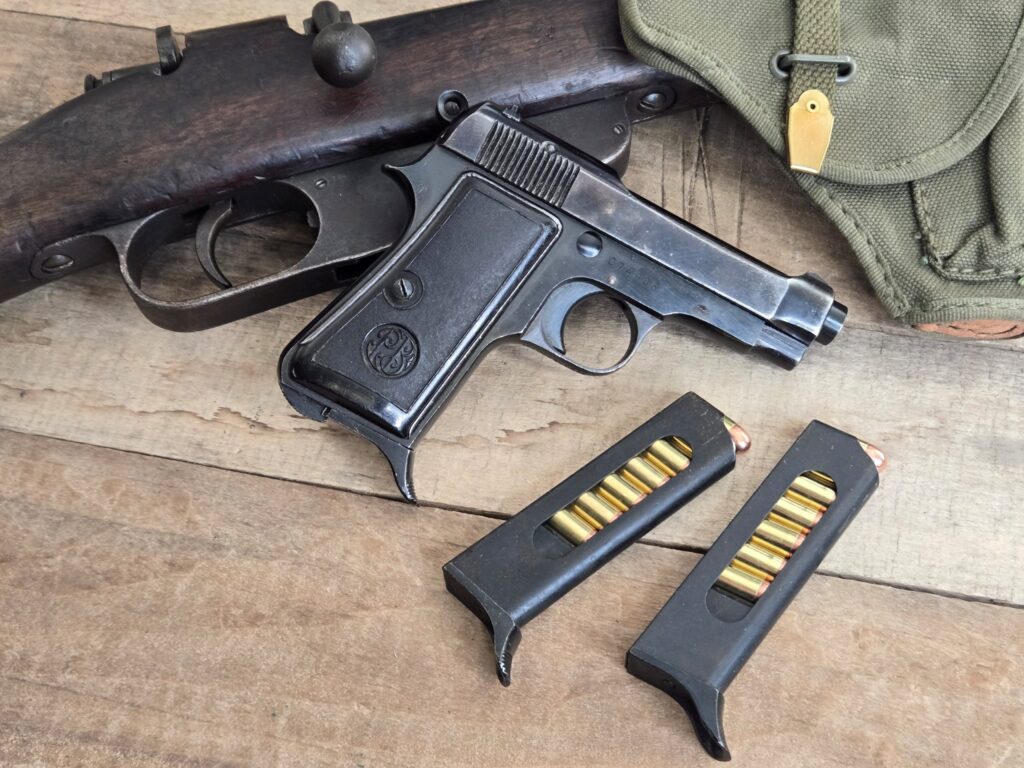
The Beretta Model 1934 isn’t just another surplus pistol—it’s a tangible link to a time when European militaries still trusted steel and simple blowback mechanics over polymer frames and striker-fired systems. Chambered in .380 ACP, this compact, all-steel handgun served Italian forces from the 1930s through the 1970s, and its continued availability on the U.S. civilian market underscores a uniquely American advantage: the ability to own and train with historic military arms that many other nations have long since destroyed or locked away. For Second Amendment advocates, the 1934 is living proof that the right to keep and bear arms preserves not only modern defensive tools but also the mechanical heritage of earlier generations—something impossible in countries where governments treat old service pistols as threats rather than heirlooms.
What makes the 1934 especially compelling today is how its modest specs defy contemporary assumptions about “adequate” defensive handguns. With a fixed barrel, crisp single-action trigger, and a magazine capacity that seems almost quaint by 21st-century standards, the pistol still delivers reliable function and surprising accuracy at typical self-defense distances. Its enduring affordability on the surplus market also democratizes access to centerfire training; shooters priced out of new striker-fired pistols can instead invest in ammunition and range time with a proven design. That accessibility matters in an era when regulatory pressure and corporate risk-aversion increasingly threaten the future supply of new semi-automatic handguns.
For the 2A community, the 1934’s story is a quiet rebuttal to the notion that civilian ownership of military-pattern arms is either dangerous or unnecessary. Italy’s decision to release these pistols into the surplus pipeline rather than melt them down stands in stark contrast to the destruction programs common elsewhere, and the result is a thriving collector and recreational market that keeps mechanical literacy alive. Every time a new shooter learns the manual of arms on a 1934, another citizen gains firsthand understanding of why the founders protected the right to keep and bear the sorts of arms that were in common military use. In that sense, the little Italian .380 isn’t merely a collectible—it’s an ongoing civics lesson in steel.


