

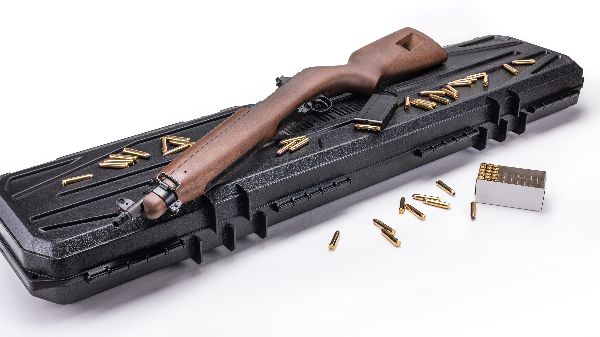
Auto-Ordnance’s new 12-inch-barreled M1 Carbine SBR lands squarely in the sweet spot between classic Americana and modern utility. By threading the barrel and adding M-Lok slots, the company has taken John C. Garand’s wartime workhorse and turned it into a suppressor-ready package that still tips the scales at a svelte 30 inches overall. That length, combined with the carbine’s already light recoil and fast-handling ergonomics, makes it an ideal truck gun, home-defense option, or even a compact woods rifle—roles where a full-size M1 would feel cumbersome. For the 2A community, the move signals that legacy manufacturers are finally listening to shooters who want their historical firearms to play nicely with today’s accessories without surrendering the soul of the original design.
Beyond the hardware, the SBR’s existence underscores how far suppressor acceptance has come. What once required paperwork gymnastics and social stigma is now a mainstream feature request, and Auto-Ordnance’s decision to ship the carbine threaded out of the box removes one more barrier for law-abiding owners. It also quietly reinforces the argument that short-barreled rifles are not inherently more dangerous; they’re simply more maneuverable tools that responsible citizens can—and do—use safely every day. In an era when anti-gun voices still push “assault weapon” rhetoric, a suppressor-ready M1 Carbine serves as living proof that the Second Amendment protects practical, even charming, configurations that predate the modern political debate by decades.
Ultimately, this release is less about chasing trends and more about preserving relevance. By marrying the M1’s storied reliability with contemporary modularity, Auto-Ordnance keeps the carbine viable for new generations of owners who value both history and function. That continuity matters: every time a classic platform is adapted rather than abandoned, it strengthens the cultural case that our rights are exercised through continued, responsible use—not museum-piece nostalgia.


