

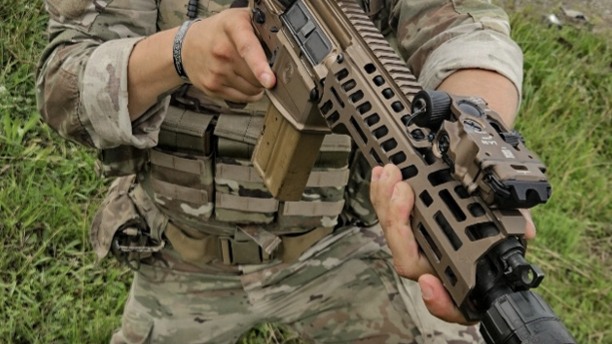
The Army’s decision to lock in nearly nine thousand DAGIR-V1 laser aiming modules isn’t just another line item on a procurement spreadsheet; it’s a clear signal that the service is doubling down on precision at the individual-soldier level. By choosing B.E. Meyers’ compact, multi-platform design for the M7 surrogate fire-control effort, the military is betting that a single, soldier-friendly laser can shrink the gap between “I think that’s the target” and “confirmed hit” under the stress of real combat. For the 2A community, the takeaway is straightforward: the same engineering that lets a rifleman paint a target at 300 meters in pitch darkness is the same technology civilians can lawfully own in most states, and the commercial market usually follows military demand within a few product cycles.
What makes the DAGIR-V1 interesting beyond the raw numbers is its emphasis on modularity and weight reduction. The system is built to ride on both the legacy M4/M16 platform and the emerging Next Generation Squad Weapon family without forcing the user to re-learn zero procedures or swap mounts every time the mission changes. That kind of plug-and-play reliability tends to trickle down to civilian carbines and pistol-caliber carbines in the form of lighter, more durable green lasers and IR illuminators. In other words, the Army’s push for better soldier lethality is quietly subsidizing the R&D that keeps American gun owners ahead of the curve on low-light engagement tools.
The larger implication is cultural as much as technological. When the Pentagon spends serious money on aiming lasers instead of just more bullets, it validates the long-held civilian argument that marksmanship and optical advantage matter more than sheer volume of fire. That validation travels from the rifle range to the range rental counter: every new generation of soldiers trained on these systems becomes a future civilian instructor or competitor who already understands why a quality laser or IR device is worth the investment. Far from threatening the Second Amendment, the DAGIR-V1 contract quietly reinforces it by proving that the same tools that make professionals deadlier also make responsible citizens more capable of protecting themselves after dark.


