

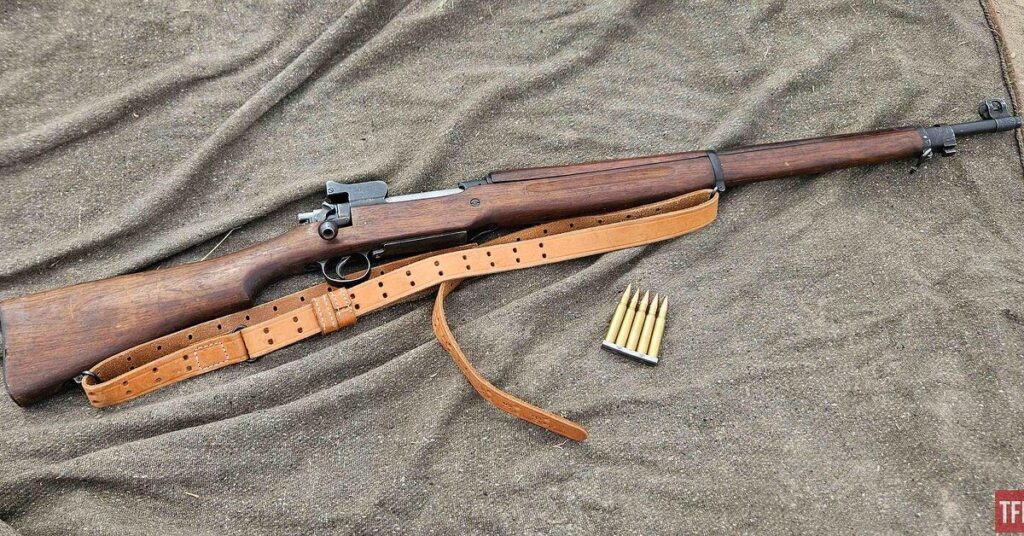
The 1917 Enfield’s story is a masterclass in how necessity can outrun dogma. When the United States entered the Great War, the Springfield Armory could not possibly scale the M1903 to the required millions of rifles, so the War Department dusted off the Pattern 14 Enfield tooling already humming in three private plants. The result was a rifle that married the Mauser action’s controlled-feed reliability with a ten-round magazine and a chambering that accepted the same .30-06 cartridge as the Springfield. In other words, the government chose function over pedigree, and the troops who carried the “U.S. Enfield” into the Meuse-Argonne never complained about the pedigree of the rifle that kept them alive.
That decision still echoes in today’s Second Amendment debates. The 1917 demonstrates that the right to keep and bear arms is not tethered to a single government-approved design; it is the right to effective arms, whatever their origin. Collectors who restore and fire these rifles today are exercising the same practical liberty the Founders assumed when they wrote “Arms” instead of “government-issue muskets.” Moreover, the Enfield’s aftermarket support—modern barrels, aperture sights, even Picatinny rails—shows how civilian ingenuity keeps historic arms relevant long after arsenals have moved on.
Finally, the rifle’s sheer numbers remind us that production capacity matters. Two million-plus rifles in two years were possible only because private firms already possessed the drawings, the skilled workforce, and the capital equipment. In an era when some policymakers would like to limit “assault weapons” to whatever a state-owned line can produce, the 1917 stands as living proof that a free market in arms is also a strategic reserve. The Doughboys did not fight with committee rifles; they fought with the best rifles American industry could improvise under pressure, and that is precisely the heritage the 2A community exists to defend.


