

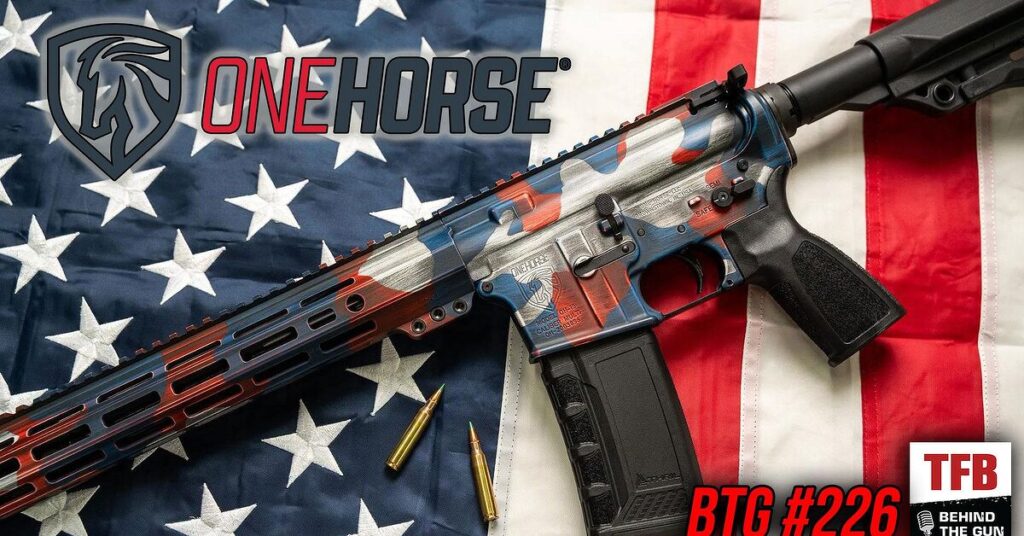
The launch of One Horse out of Brownstown, Indiana, feels less like a simple rebrand and more like a deliberate hand-off of institutional knowledge from Anderson Manufacturing’s shuttered lines to a fresh, fully domestic operation. Jeremy Hammons and Drew Markel aren’t just assembling rifles; they’re preserving the tooling, supplier relationships, and manufacturing discipline that once fed a sizable slice of the AR-15 market, now under a banner that signals both independence and continuity. Their new One Horse Express model, positioned for quicker turnaround without sacrificing the 100-percent American-made standard, suggests they’ve studied the post-2020 supply-chain shocks and are betting that speed-to-shelf will matter as much as pedigree in the next buying cycle.
For the broader Second Amendment community, this story underscores a quiet but critical evolution: when legacy producers exit, the ecosystem doesn’t vanish—it fragments and reconstitutes in smaller, nimbler shops that can pivot faster than corporate giants. One Horse’s timing matters; with regulatory pressure and import uncertainty still hovering, every new domestic capacity point strengthens the argument that American gun owners can meet demand without foreign crutches. The move also highlights how regional manufacturing clusters in places like southern Indiana continue to punch above their weight, keeping skilled labor and capital inside red-state economies that treat firearms production as legitimate industry rather than political liability.
Ultimately, the transition from Anderson’s scale to One Horse’s agility illustrates that the right to keep and bear arms is sustained not only by court rulings but by the day-to-day decisions of entrepreneurs willing to bet on domestic steel, domestic workers, and domestic customers. If One Horse can maintain quality while scaling the Express line, it will serve as a proof-of-concept that smaller makers can absorb the market share left by larger exits—keeping innovation, competition, and manufacturing jobs firmly on U.S. soil.


