

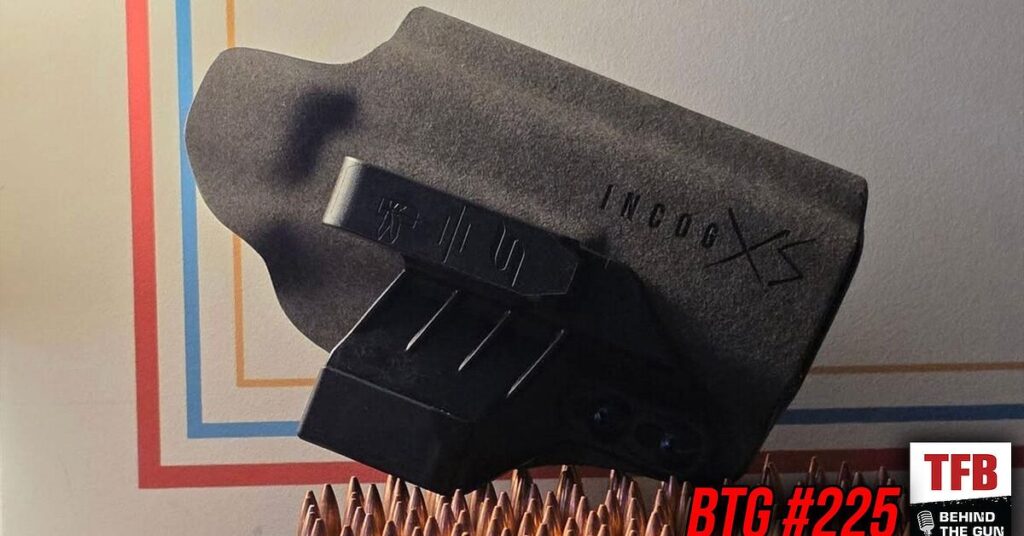
The IncogXS represents more than just another holster iteration—it’s a calculated response to the real-world demands of everyday carriers who refuse to compromise between concealment and readiness. By shrinking the Incog X platform down to a single-clip, deep-concealment IWB design, Safariland and Haley Strategic have essentially acknowledged that the modern micro-compact revolution isn’t just about smaller guns; it’s about smaller, smarter carry systems that actually disappear under clothing without sacrificing the features serious users expect. The microfiber suede wrap, RDS compatibility, and ambidextrous Boltaron shell aren’t marketing checkboxes—they’re practical concessions to the fact that today’s concealed carriers are running red dots on pistols that fit in pockets, and they need holsters that can keep up without printing or requiring constant readjustment.
What makes the LinXS attachment system particularly noteworthy is how it quietly expands the tactical flexibility of what was previously a fairly rigid category of deep-concealment gear. The ability to shift between 3-6 o’clock positions without swapping hardware speaks to a growing segment of the 2A community that values adaptability over specialization—whether that’s the office worker who needs to adjust carry position throughout the day or the instructor who demonstrates multiple techniques across different body types. This isn’t just about comfort; it’s about removing friction points that might discourage consistent carry in the first place.
For the broader firearms community, the IncogXS signals that major manufacturers are finally treating deep concealment as a serious engineering challenge rather than an afterthought. As more states expand constitutional carry and more citizens opt for smaller platforms they can actually carry daily, the market is rewarding companies that solve the practical problems of all-day wear rather than just chasing the latest tactical aesthetic. The collaboration between Safariland’s manufacturing muscle and Haley Strategic’s end-user focus suggests we’re entering an era where holster innovation will be driven by actual carry data rather than range-day assumptions—a shift that benefits every law-abiding citizen who’s made the decision to go armed.


