

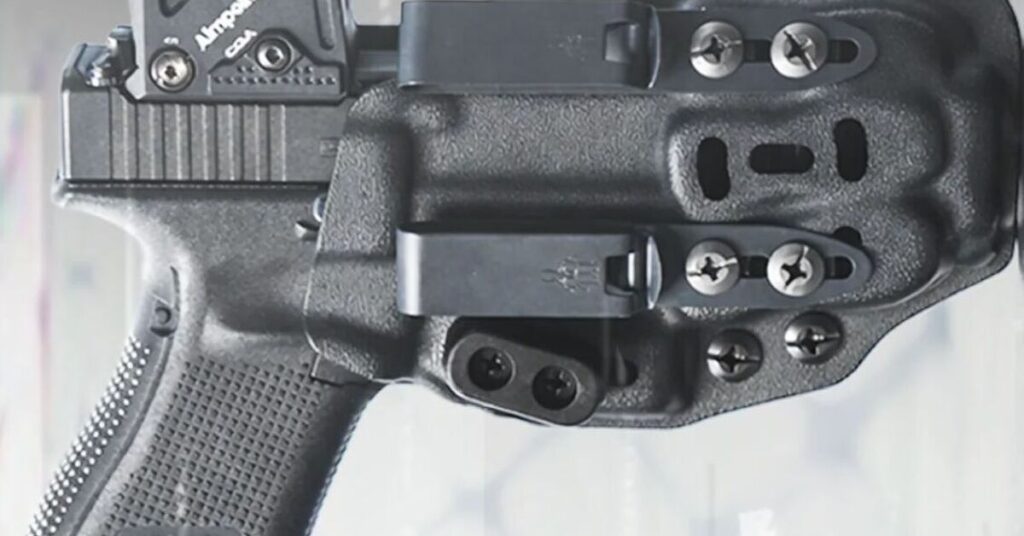
Tenicor’s decision to refresh its flagship CERTUM platform with the CERTUM4 and CERTUM LUX4 isn’t just an incremental update—it’s a quiet affirmation that the modern concealed-carry market has matured past the era of single-purpose holsters. By keeping the same chassis capable of both strong-side IWB and appendix carry, Tenicor continues to reject the notion that shooters must buy two rigs to cover two positions. The $125 price point is telling: it signals that a company can still deliver CNC-machined kydex, adjustable retention, and optic-compatible molding without charging the “premium tax” that has crept into the holster space. For the 2A community, that matters because it lowers the barrier to experimenting with carry positions—an experiment that often leads to more consistent daily carry and, ultimately, higher proficiency.
What stands out is how little Tenicor had to change to stay relevant. The Gen-4 refinements focus on refined sweat guards, improved claw geometry, and a slightly re-contoured muzzle pad—small touches that address real feedback from appendix carriers who log serious miles. In an industry where feature creep can sometimes mask mediocre fundamentals, Tenicor’s restraint reads as confidence. The fact that both the standard CERTUM4 and the LUX4 (with its enhanced sight-channel and taller sweat guard) share the same mounting footprint also means existing Tenicor belt attachments remain forward-compatible, protecting the consumer’s investment in a way that encourages brand loyalty rather than planned obsolescence.
For the broader Second Amendment ecosystem, this release quietly reinforces a cultural shift: concealed carry is no longer a niche hobby but a daily habit for hundreds of thousands of Americans who expect gear that disappears until it’s needed. Tenicor’s willingness to iterate on a proven platform instead of chasing the next gimmick suggests the market is rewarding companies that treat carry as a system rather than a single product. In practical terms, that means more people keeping a quality holster on their belt—or in the appendix position—every day, which translates to more trained, legally armed citizens. That outcome serves the right to keep and bear arms far more effectively than any marketing slogan.


