

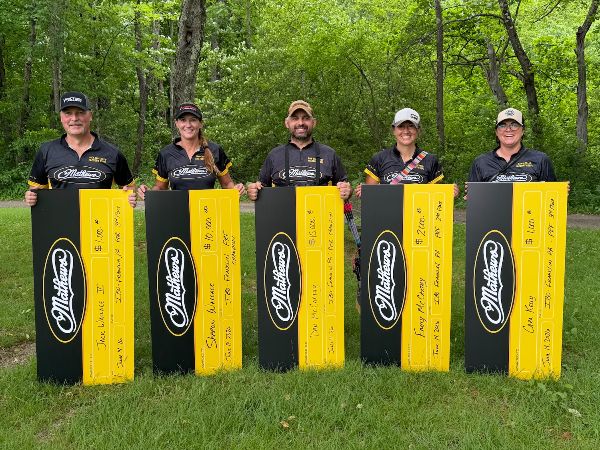
Team Mathews just turned the second stop of the 2026 IBO Triple Crown into a master class in precision engineering and shooter development, with Dan McCarthy topping the men’s field while Sharon Wallace, Emily McCarthy, and Cara Kelly locked out the women’s podium in Franklin, Pennsylvania. What stands out isn’t merely the scoreboard; it’s the way Mathews’ platform—tight tolerances, low-vibration geometry, and consistent tunability—translates raw talent into repeatable dominance under the pressure of a national points race. When one brand’s athletes occupy every step of a pro division, it signals that their design choices are scaling across skill levels and body types, something the broader archery community watches closely because the same mechanical principles that shrink groups at 50 yards also underpin the reliability hunters and self-defense practitioners demand from their equipment.
For the 2A world, these results carry a quiet but unmistakable message: the companies investing in serious R&D and athlete feedback loops are the ones producing tools that hold up when seconds count. Mathews’ sweep demonstrates that American manufacturing can still deliver measurable performance advantages without relying on foreign supply chains or watered-down specs, reinforcing the argument that innovation, not restriction, keeps civilians ahead of emerging threats. As the Triple Crown circuit rolls on, expect the data from Franklin to ripple outward—more clubs ordering Mathews rigs, more weekend archers chasing the same edge, and a stronger collective reminder that marksmanship excellence and the right to keep and bear arms are two sides of the same cultural coin.


