

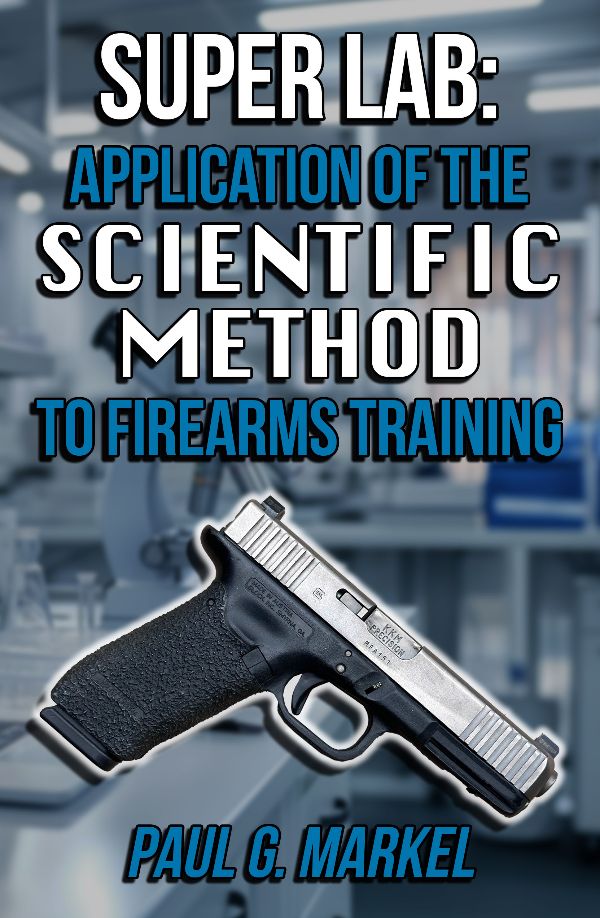
Paul G. Markel’s new book, “Super Lab,” turns the dry language of the scientific method into a practical training manual for shooters who want measurable improvement instead of endless range platitudes. By treating every range session like a controlled experiment—defining a hypothesis, isolating variables, recording data, and iterating—Markel gives shooters a framework that replaces “spray and pray” with deliberate, evidence-based practice. The result is a training culture that values precision over volume and replaces the folklore of “I think I’m getting better” with hard numbers that prove it.
For the 2A community, this approach is quietly revolutionary. In an era when anti-gun voices demand “more training” as a precondition for rights, Markel’s method hands gun owners the tools to demonstrate competence on demand. A shooter who can show, with graphs and targets, that their groups shrank 30 percent after adjusting grip angle or trigger reset timing has a stronger rhetorical position than one who simply claims to be “responsible.” More importantly, the same data-driven mindset scales from individual skill-building to collective advocacy: clubs can publish aggregate results, instructors can refine curricula, and the community can push back against arbitrary qualification standards with empirical evidence rather than anecdotes.
The deeper implication is cultural. By borrowing the language of science, Markel reframes firearms proficiency as an intellectual pursuit rather than a tribal rite. That shift matters when legislators and courts weigh the “common use” and “well-regulated” clauses of the Second Amendment; a population that treats marksmanship like a laboratory discipline is harder to dismiss as reckless or unserious. In short, “Super Lab” doesn’t just teach better shooting—it equips the 2A movement with a new dialect of credibility that translates directly into policy debates and courtroom arguments.


