

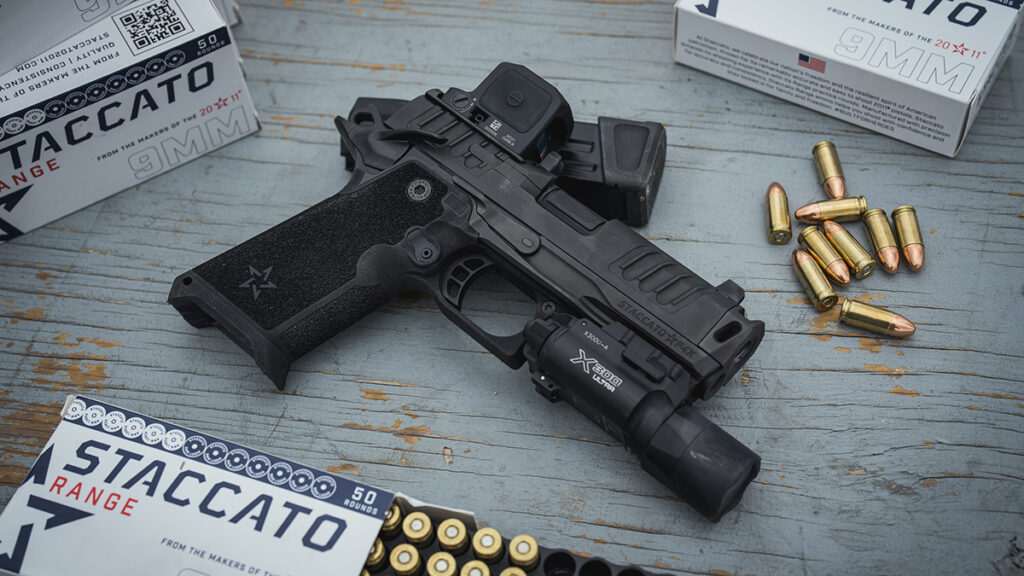
Staccato’s new HD P4X isn’t just another optics-ready 2011; it’s a deliberate pivot toward the duty market with a steel frame, integrated compensator, and the kind of durability that law-enforcement and military buyers actually write checks for. By moving away from the aluminum or polymer frames that dominate the competition-pistol space, Staccato is signaling that the modern 2011 platform can survive the abuse of holster draws, vehicle mounting, and daily carry without sacrificing the flat-shooting characteristics that made the brand famous. The compensator isn’t an afterthought either—it’s machined into the slide and tuned to the 9 mm chamber, keeping the gun on target during rapid strings while still fitting most common duty holsters.
For the broader 2A community this release matters because it narrows the gap between what civilians can legally own and what agencies are actually fielding. When a major manufacturer builds a compensated, steel-frame 2011 to agency specs and then offers it over the counter, it normalizes features that were once the exclusive province of special-operations units or high-end race guns. That normalization pushes the Overton window: if departments trust the platform for duty, legislators have a harder time painting the same technology as “exotic” or “military-only.” In practical terms, it also gives private citizens a factory-supported option that can serve as both a competition gun on Saturday and a home-defense or truck gun the rest of the week, reinforcing the idea that the right to keep and bear arms includes the right to the most effective modern designs.
The larger implication is economic and cultural. Staccato’s move pressures legacy duty-pistol makers to either innovate or lose contracts, while simultaneously giving smaller custom shops a benchmark to chase. Every time a company like this brings duty-grade features into the civilian catalog, it chips away at the narrative that certain configurations are too dangerous for law-abiding owners. The HD P4X is therefore more than a new SKU—it’s another data point proving that the 2A ecosystem continues to drive genuine product evolution rather than merely reacting to restrictions.


