

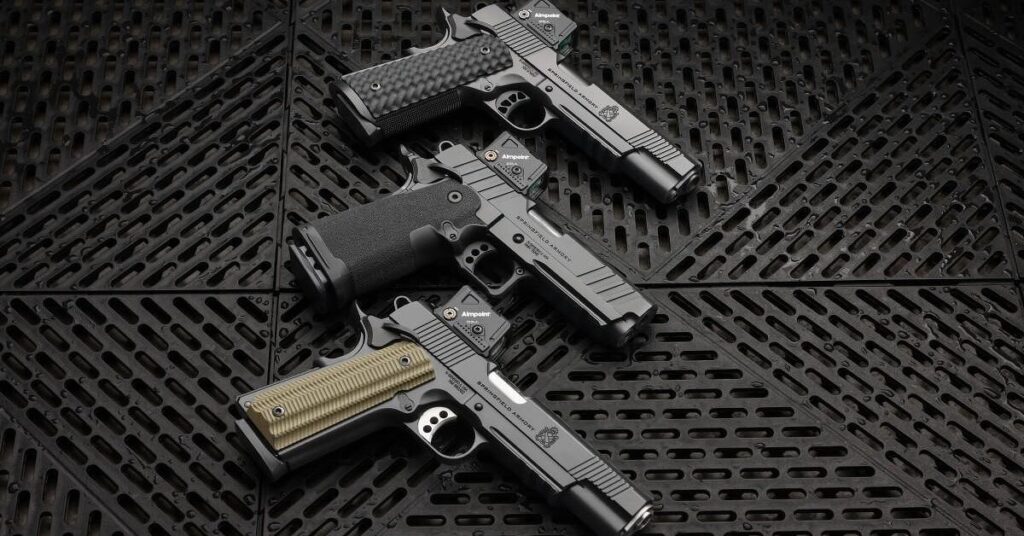
Springfield Armory’s decision to factory-mount the Aimpoint COA on three distinct 1911 platforms—the classic Operator, the premium TRP, and the double-stack DS Prodigy—signals more than a simple optics bundle; it’s a deliberate bridge between the 1911’s century-old ergonomics and the modern expectation of a sealed, shake-awake red dot that survives hard use. By choosing the COA’s proprietary, recoil-lug interface rather than an aftermarket plate, Springfield removes the weakest link in most pistol-optic setups and simultaneously validates Aimpoint’s enclosed-emitter architecture as the new baseline for duty-grade 1911s. For the 2A community this matters because it normalizes the idea that even heritage defensive pistols can—and should—leave the factory with the same level of sighting reliability once reserved for military carbines, reducing the cottage-industry scramble for custom milling and reinforcing the notion that rights-protected tools evolve without surrendering their core identity.
The move also quietly underscores a larger industry trend: the 1911 platform is no longer a niche collector’s item but a living canvas for defensive innovation. When a mainstream manufacturer like Springfield commits three separate SKUs to an optic that costs nearly as much as some complete pistols, it tells consumers and legislators alike that the 1911 remains commercially viable precisely because it can absorb contemporary upgrades without legislative friction. In practical terms, buyers now receive a turnkey defensive package whose zero is more likely to survive a class or a competition than a traditionally dovetailed sight, lowering the training barrier for new shooters and giving experienced carriers one less variable to manage under stress. That combination of factory reliability and constitutional continuity is exactly the kind of incremental progress the 2A ecosystem needs—proof that American gun culture can modernize without asking permission.


