

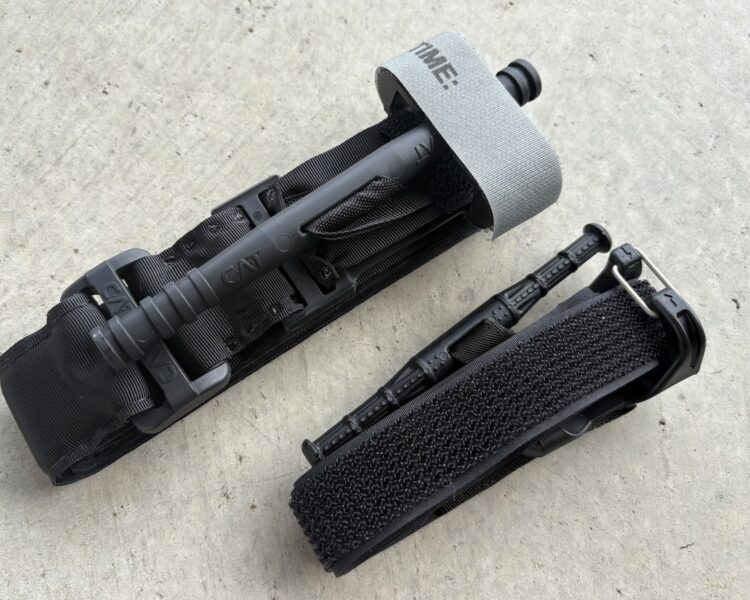
Snakestaff Systems isn’t chasing the CAT’s crown; it’s carving out a niche for the everyday carrier who already balances a holster, spare mag, and flashlight on their belt. By shrinking the tourniquet’s footprint without sacrificing the core mechanics that stop arterial bleeds, the ETQ mirrors the logic behind the G43X: same trusted platform, just trimmed for all-day comfort. That matters in a culture where the line between “prepared” and “paranoid” is drawn by ounces and cubic inches; if the tool disappears until you need it, more people will actually carry it.
For the 2A community the implication is straightforward—rights without readiness are just rhetoric. A pistol on the hip is only half the equation when the first 30 seconds of a gunshot wound decide whether that pistol stays holstered or gets used to cover an escape. The ETQ’s design quietly normalizes the idea that medical intervention is part of the same continuum as marksmanship, training, and legal awareness. Carriers who adopt it are voting with their gear that self-defense includes the willingness to preserve life, not merely end a threat.
Critics will note that no single tourniquet replaces institutional trauma care, yet the ETQ’s value lies in shrinking the gap between “I wish I had something” and “I applied pressure in under ten seconds.” In states where training standards already treat stop-the-bleed skills as range prerequisites, this little strap becomes another brick in the wall of responsible ownership. The 2A isn’t just about what you can carry; it’s about what you’re prepared to sustain when seconds count.


