

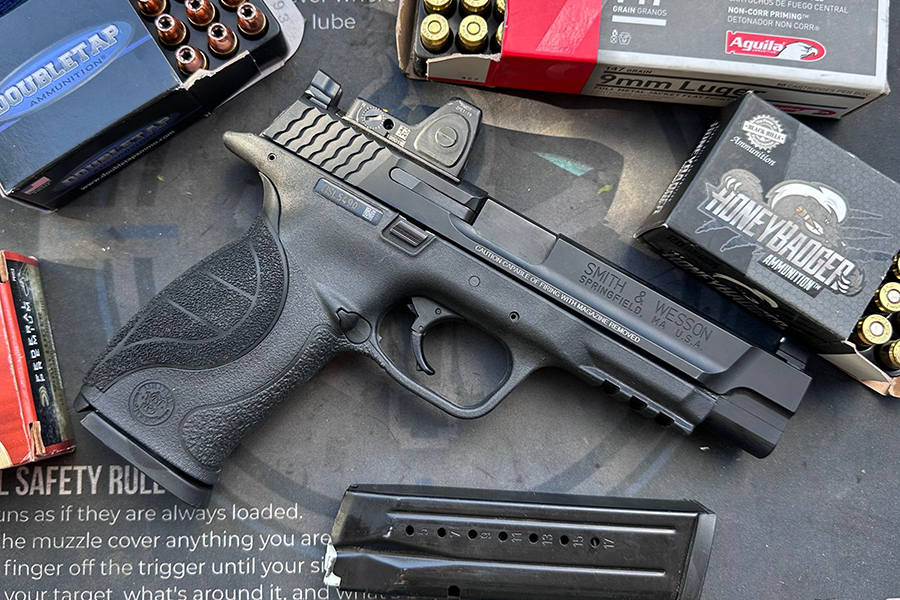
If you happened to be someone who just got interested in firearms, it would be easy for you to assume that modern handguns have always had their slides cut from the factory for optics, but the Smith & Wesson M&P C.O.R.E. line actually helped pioneer that shift more than a decade ago. By machining the slide for a direct-mount red-dot interface instead of forcing shooters to rely on fragile adapter plates or aftermarket milling, S&W gave everyday carriers and competition shooters a duty-grade pistol that could keep up with the growing demand for faster target acquisition and lower optics. That decision wasn’t just cosmetic; it signaled that one of America’s legacy manufacturers was willing to treat optics as a core feature rather than an afterthought, and the refreshed C.O.R.E. models continue that legacy with improved ergonomics and suppressor-height sights that co-witness cleanly with popular micro-dots.
For the 2A community the move carries deeper implications than mere convenience. When a major American company like Smith & Wesson bakes optic readiness into its flagship striker-fired platform, it normalizes the idea that defensive handguns should be as capable as the optics industry can make them, reinforcing the principle that citizens have both the right and the practical need to equip themselves with the most effective tools available. It also pressures other manufacturers to follow suit or risk losing market share to imports that already treat red-dot pistols as standard issue. In an era when state and local governments keep testing new restrictions on magazine capacity and feature bans, a factory optic-ready M&P becomes more than a product; it becomes tangible proof that innovation and individual preparedness remain stronger than bureaucratic attempts to freeze technology in 1994.


