

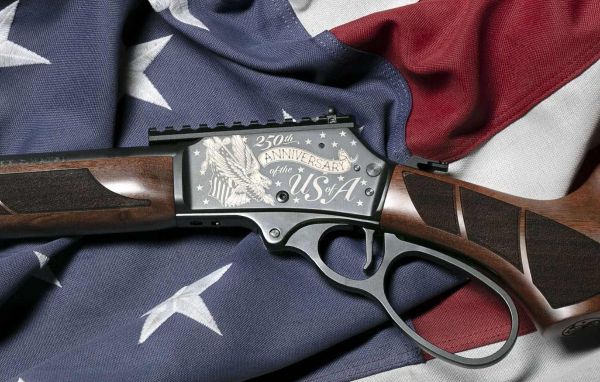
Smith & Wesson’s decision to mark America’s 250th anniversary with a limited-edition Model 1854 is more than a commemorative flourish—it’s a deliberate nod to the lever-action’s foundational role in the American story. The 1854 platform, originally a side-loading lever gun that helped define the frontier era, is being reissued in a configuration that blends historical lines with modern manufacturing tolerances, giving today’s shooters a tangible link to the same mechanical DNA that once rode in saddle scabbards from Missouri to Montana. By capping production and dressing the rifle in period-appropriate touches—engraved anniversary medallions, special serial ranges, and classic walnut—the company is signaling that heritage firearms are not museum pieces but living tools whose relevance endures precisely because the right to keep and bear arms remains constitutionally protected.
For the 2A community, the release arrives at a moment when cultural and legislative pressures continue to test that protection. Each limited run functions as both product and quiet argument: these rifles exist because individuals and companies still exercise the commercial corollary of the Second Amendment. Collectors who secure one are not merely acquiring a firearm; they are participating in a supply-side affirmation that private ownership of historically significant arms is still lawful and valued. In an era when some jurisdictions treat magazine capacity or action type as suspect, a factory-produced lever gun dressed for the Semiquincentennial quietly underscores that the tools of 1776 and 1876 remain lawful in 2026.
Beyond symbolism, the Model 1854 limited edition also hints at broader market dynamics. Smith & Wesson’s willingness to invest in a heritage platform suggests sustained consumer demand for firearms that carry narrative weight rather than purely tactical utility. That demand, in turn, reinforces the economic ecosystem—small-batch machining, custom engraving, and collector-grade finishes—that keeps skilled labor and institutional knowledge alive inside the American firearms industry. When the last of these rifles leaves the factory, the message will be unmistakable: the right to bear arms is not an abstraction; it is exercised every time a citizen purchases, carries, or simply admires a well-made lever gun whose lineage stretches back to the nation’s founding.


